Automation Rules can also apply to updates that do not exist yet. When devices report matching updates later, the rules can pick them up.
When Automation Rules run, FileWave creates one Fileset per included update and ignores excluded updates. The 'Is New' flag changes to 'No' when a Fileset is generated, so excluded updates remain marked as new. You can manually change the 'Is New' flag for one or more updates from the right-click contextual menu: [](https://kb.filewave.com/uploads/images/gallery/2026-03/lghZjwKTRhRMBP5E-image.png)Resetting the 'Is New' flag to 'Yes' makes the update eligible the next time Automation Rules run. Setting it to 'No' keeps that update out of rule processing, regardless of matching rules.
Once rules are configured, run them with the **Run Automation** button. At the time of writing, this is a manual action.The 'Is New' flag changes from 'Yes' to 'No' only when a rule causes a Fileset to be generated.
## How Only FileWave Administrators with necessary permissions may perform some or all of these actions, as set in: Assistants -> Manage Administrators: - Manage Updates - Configure Automation Rules [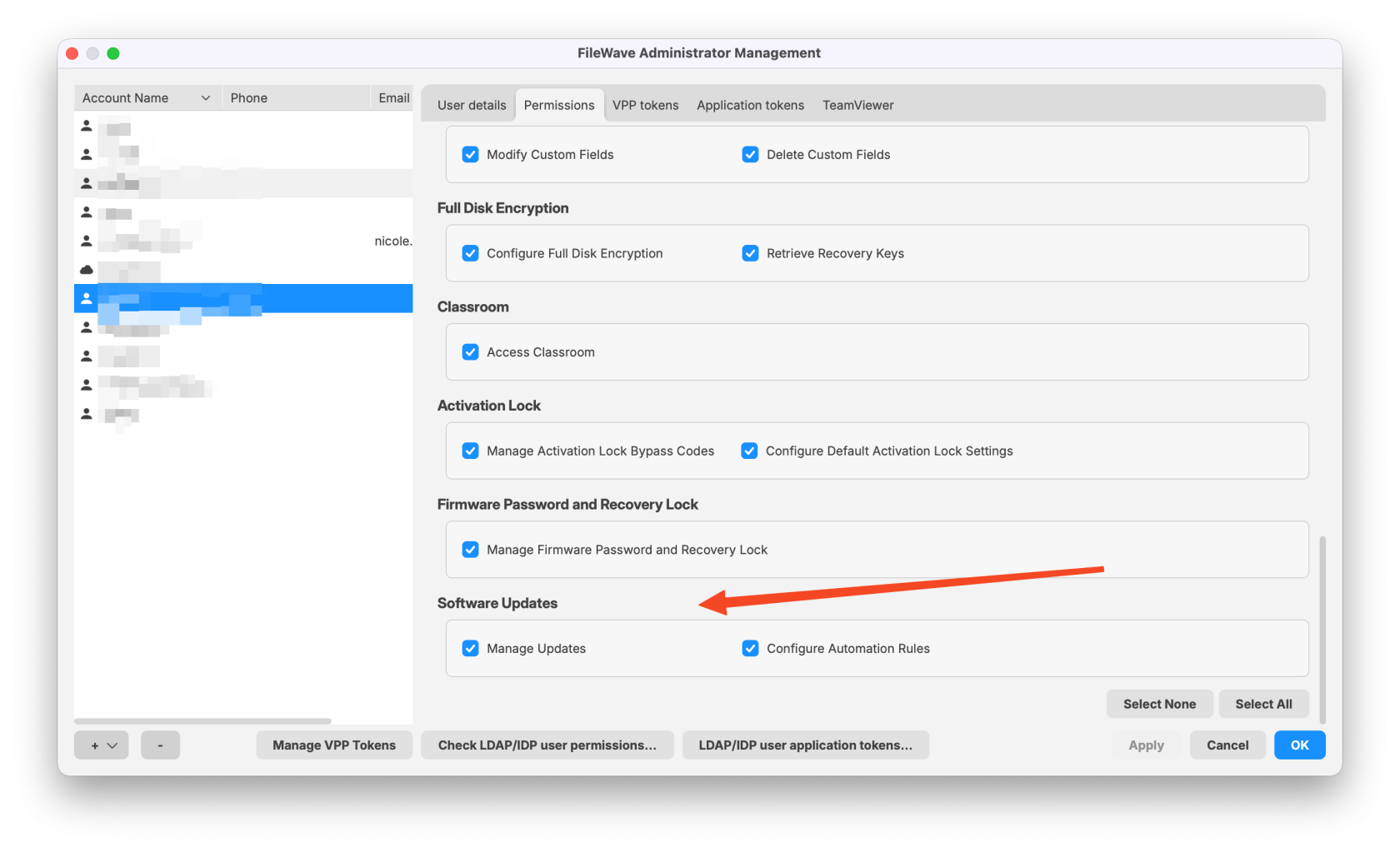](https://kb.filewave.com/uploads/images/gallery/2025-10/JYVReI06jXcZkkgL-image.png) Select **Automation Rules** in the Software Updates toolbar to view existing rules or create new ones: [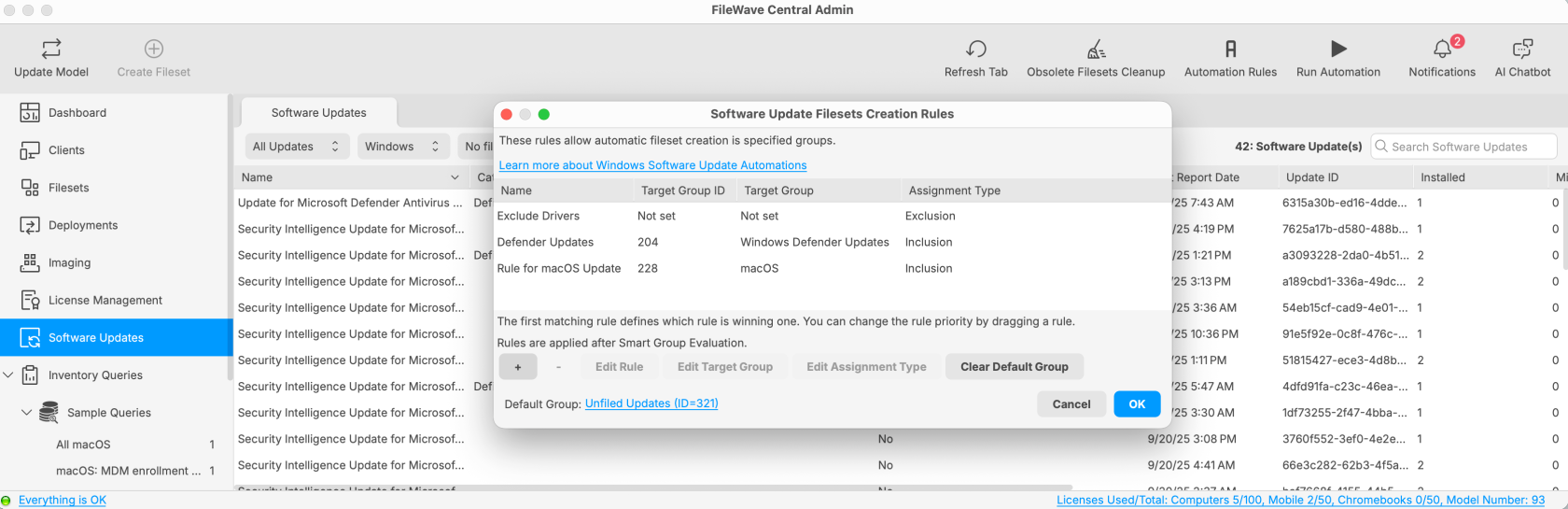](https://kb.filewave.com/uploads/images/gallery/2025-09/HwOy6gpJKoqa6bWw-image.png) The example above has three rules: one exclusion rule, two inclusion rules, and a designated Default Group. Any updates marked as new that do not match the rules generate Filesets in the Default Group. This can help you identify new updates that were not handled by a specific rule.If you do not set one, there is no Default Group.
Use the + and - buttons to add or remove rules. Select a rule to edit its target group or assignment type. If a Default Group is set, you can clear it.If there is **no Default Group**, updates that do not match inclusion rules behave like exclusions: the 'Is New' flag stays set to 'Yes' and no Fileset is created.
Rules run from top to bottom. Exclusion rules prevent matching updates from being considered by later rules. The first matching inclusion rule generates a Fileset and sets the 'Is New' flag to 'No', so later rules no longer process that update. Only one Fileset is generated for each included update during a Run Automation pass.Drag rules up or down to change the order.
Place exclusion rules at the top of the list to prevent Filesets from being created for updates that meet the exclusion criteria.
The rules view works like Reports (formerly Inventory Queries). Give each rule a clear name, then add criteria components to define which updates it should match: [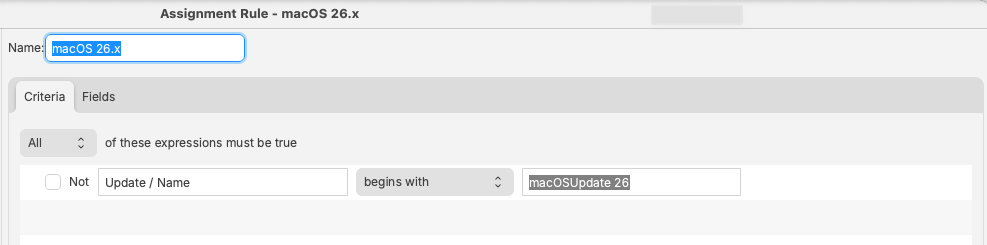](https://kb.filewave.com/uploads/images/gallery/2026-03/z1Cp3RxvQ2nLj6wE-image.png) The Fields tab lists updates caught by the rule definition: [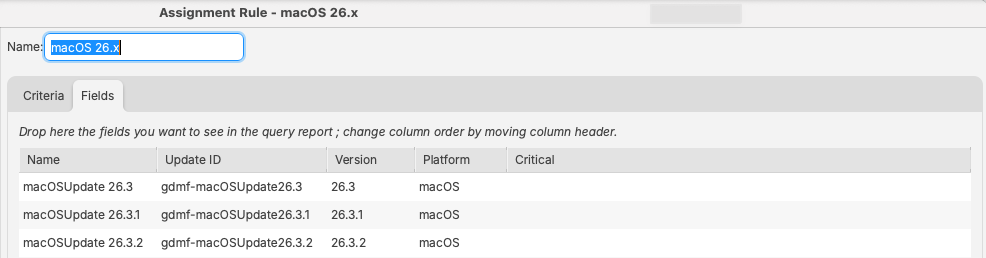](https://kb.filewave.com/uploads/images/gallery/2026-03/t71MWUgeU3E44CAG-image.png) #### Example Consider the following rules: [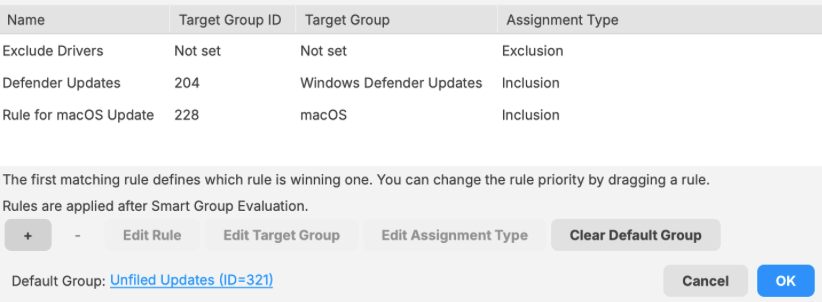](https://kb.filewave.com/uploads/images/gallery/2026-03/DzVePttgW70N4ZIO-image.png) These rules run in the following order:| **Rule** | **Description** | **New** |
| 1: Exclude Drivers | The criteria of this rule are set to ignore all Windows drivers. | Updates remain as 'New'. |
| 2: Defender Updates | This rule targets Windows Defender updates and places them in a similarly named Fileset Group for testing and assignment. | Updates altered to 'Not New' |
| 3: Rule for macOS Update | This rule adds all macOS updates to a Fileset Group named 'macOS'. | |
| 4: Default Group | Any updates that are still marked as new and do not match the rules above will have Filesets created in this group, 'Unfiled Updates'. *This highlights updates that were new but did not match any rule criteria.* |
Manual Fileset creation from the Software Update view also sets the 'Is New' flag as 'No'. Updates left untouched will remain as new and come into scope after the defined period of time.
Devices associated with the test group should receive the updates. After testing is approved, you can consider those updates for broader deployment. For each approved update, manually reset the 'Is New' flag to 'Yes'. When the update comes into scope by date, Automation Rules can generate Filesets in the groups targeted by each rule. If an update is not approved, leave it set to 'No' so it is not included when the date scope is reached.This method lets you pre-assign both test and production update groups, reducing follow-up manual work.
## ## Related Content - [Automated Windows OS Updates Policy](https://kb.filewave.com/books/software-updates-windows/page/automated-windows-os-updates-policy "Automated Windows OS Updates Policy") - [Best Practice Guide: Software Update Deployment (16.0+)](https://kb.filewave.com/books/top-tips/page/best-practice-guide-software-update-deployment-160 "Best Practice Guide: Software Update Deployment (16.0+)") # OS Software Updates - Obsolete Filesets Cleanup ## What In FileWave you can patch your Apple and Windows devices very easily but over time you will accumulate many Filesets related to OS patching. This feature that was added to FileWave 16.2.0 will allow you to perform a quick and easy cleanup. ## When/Why While the updates don't occupy much space at all on your FileWave Server, you may not want to have hundreds or thousands of OS update Filesets in your Filesets view. In the past you would have to manually figure out what patches were old enough to want to purge. Now you can simply purge updates that have not been requested in a set amount of time. ## How First it is important that your account has permissions to perform these actions. In Assistants -> Manage Administrators as shown in the below image notice if you have Manage Updates enabled. If you'll be using Automations then ensure you have that right as well. [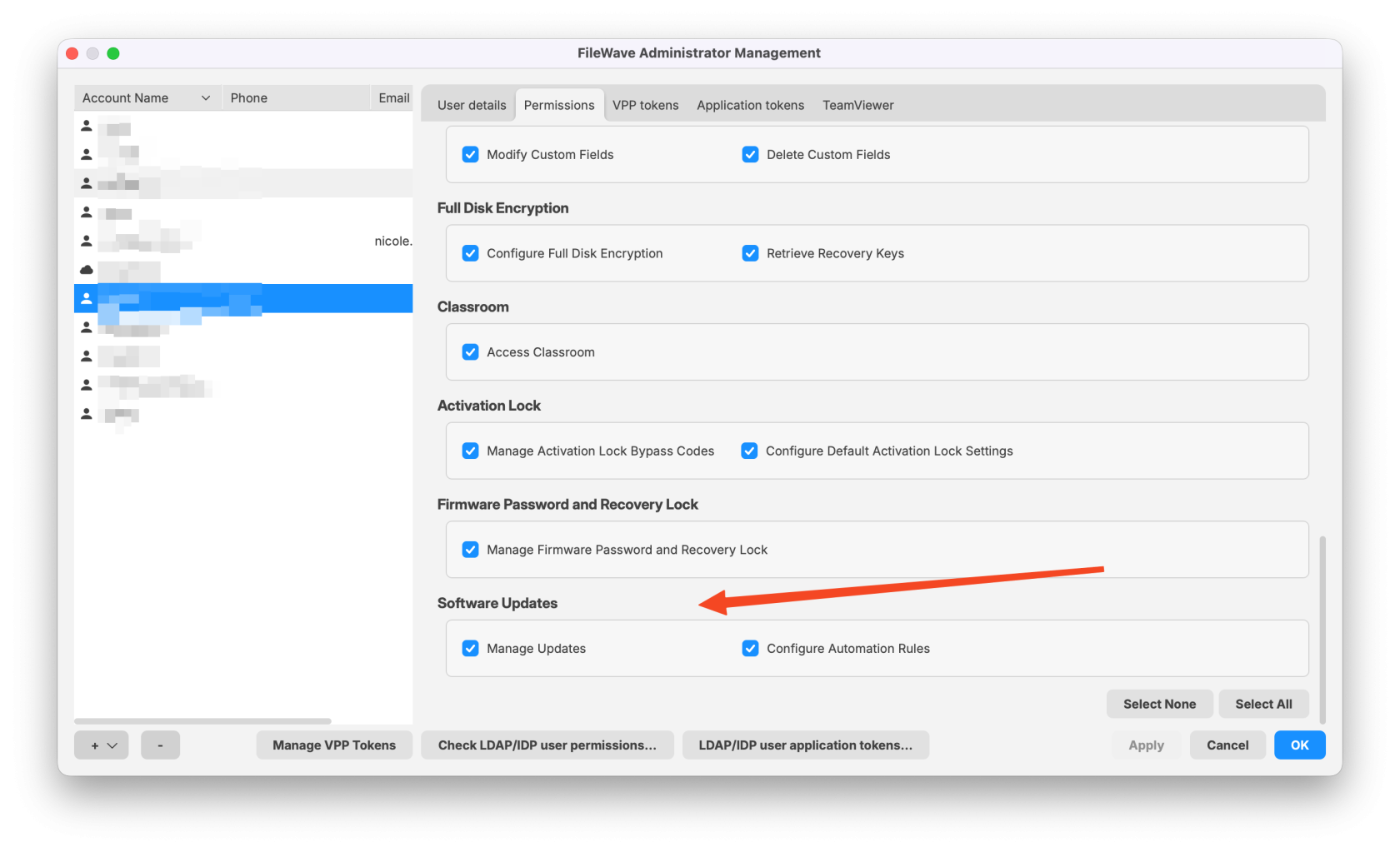](https://kb.filewave.com/uploads/images/gallery/2025-10/zyECvAtE8yZDYxuV-image.png) The next thing is to determine what you consider to be old enough to purge. In Preferences within FileWave Central you can pick 30, 60, 180, or 365 days. For most people 60 or 180 days is the best value. It gives an update enough time that it hasn't been requested. You'll want to go in to Preferences and pick a value. [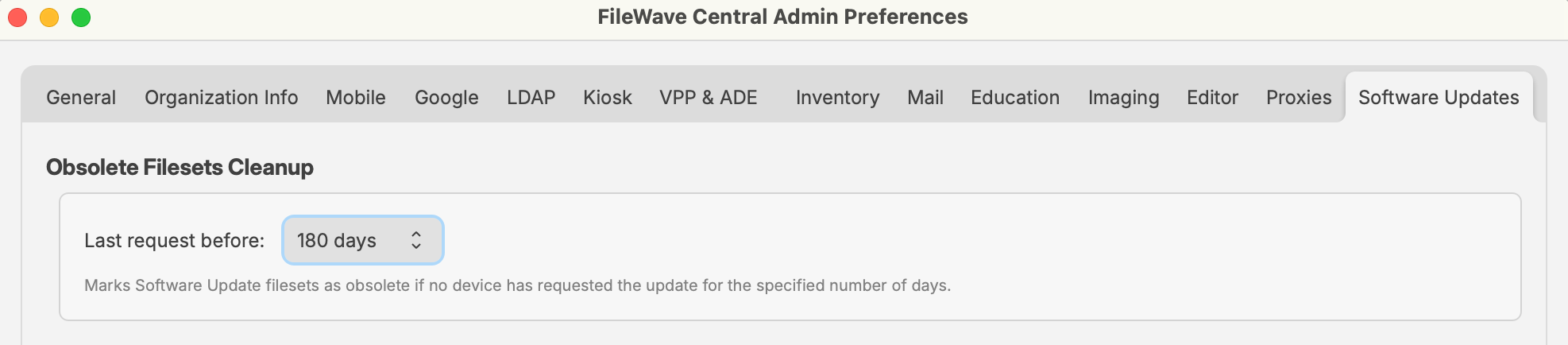](https://kb.filewave.com/uploads/images/gallery/2025-09/lPlMZAyJkrS2MNoO-image.png) Next to do the cleanup you'll want to go to the Software Updates section of Central and click on the **Obsolete Filesets Cleanup** button in the toolbar. A dialog like the below will appear. Now simply click **Select All** and then click the **Delete Selected** button to purge them.Note that this will only purge OS updates, but will purge both Apple as well as Windows OS patches. If a device later needs an update that was purged it will appear as New in the Software Updates section and you can make a Fileset for it again. For this reason it might be too aggressive to pick 30 days since you might find that updates are often purged and then need to be created again.
[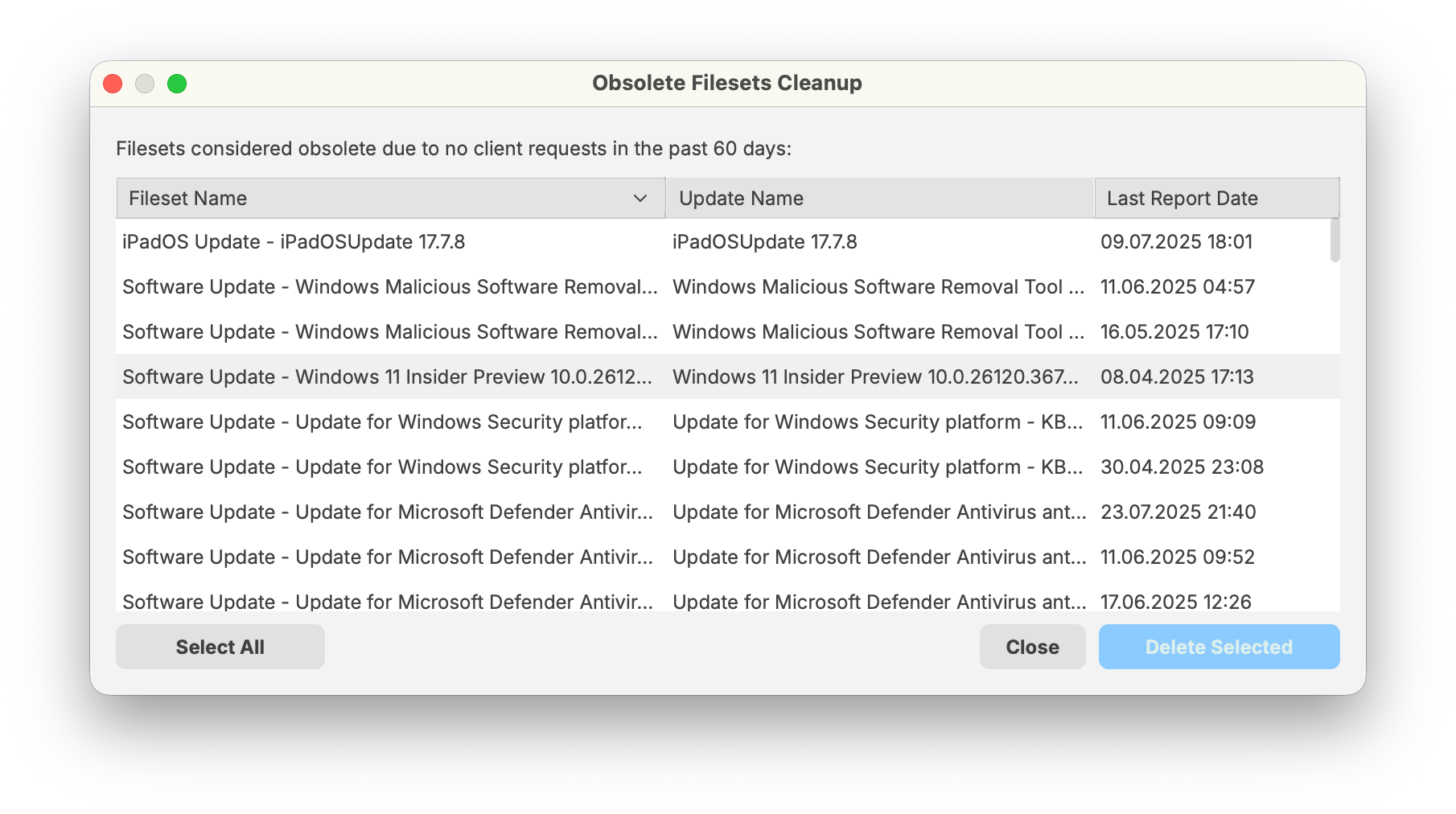](https://kb.filewave.com/uploads/images/gallery/2025-09/dyWZqGHvCDpVG6eQ-image.png) Those are the only steps. For now this is a manual process but in the future it might be something where automation is added for it. ## Related Content - [OS Software Updates - Automation Rules](https://kb.filewave.com/books/filewave-central-anywhere/page/os-software-updates-automation-rules "OS Software Updates - Automation Rules") - [OS Software Updates](https://kb.filewave.com/books/evaluation-guide/page/os-software-updates "OS Software Updates")