
Windows Software Update Reporting
What
Windows Software Update reporting shows which updates each managed Windows device is missing, which updates were requested, and which updates are already installed. Use it to assess patch exposure and verify remediation without relying only on deployment status.
- The number of missing updates is reported for each Windows device
- A list of all installed updates is reported for each Windows device
- A list of all requested updates is reported for each Windows device
- Supported Windows devices report update status regardless of enrollment type
FileWave 16.0 introduced the current Windows update architecture:
- Managed devices report the updates they need instead of relying on an offline catalog. This avoids resource-intensive catalog parsing and covers updates that Microsoft's offline catalog did not include.
- Updates are downloaded directly from Microsoft and installed using Microsoft Update tools, which allows support for an increased number of update types.
- Only update metadata is imported into the FileWave Server. Clients and Boosters download update content from Microsoft CDNs, and FileWave Boosters can cache that content to reduce WAN traffic. See the Booster port requirements.
- A stalled Windows Update service no longer blocks the FileWave Client.
- On Windows, update installation history is now made available, even for updates not installed via FileWave.
When/Why
Use this inventory to find devices that are missing Microsoft patches, confirm whether requested updates installed, and build reports from update metadata. Devices report this data every hour. For deployment guidance across Apple and Windows devices, see OS Software Updates.
How
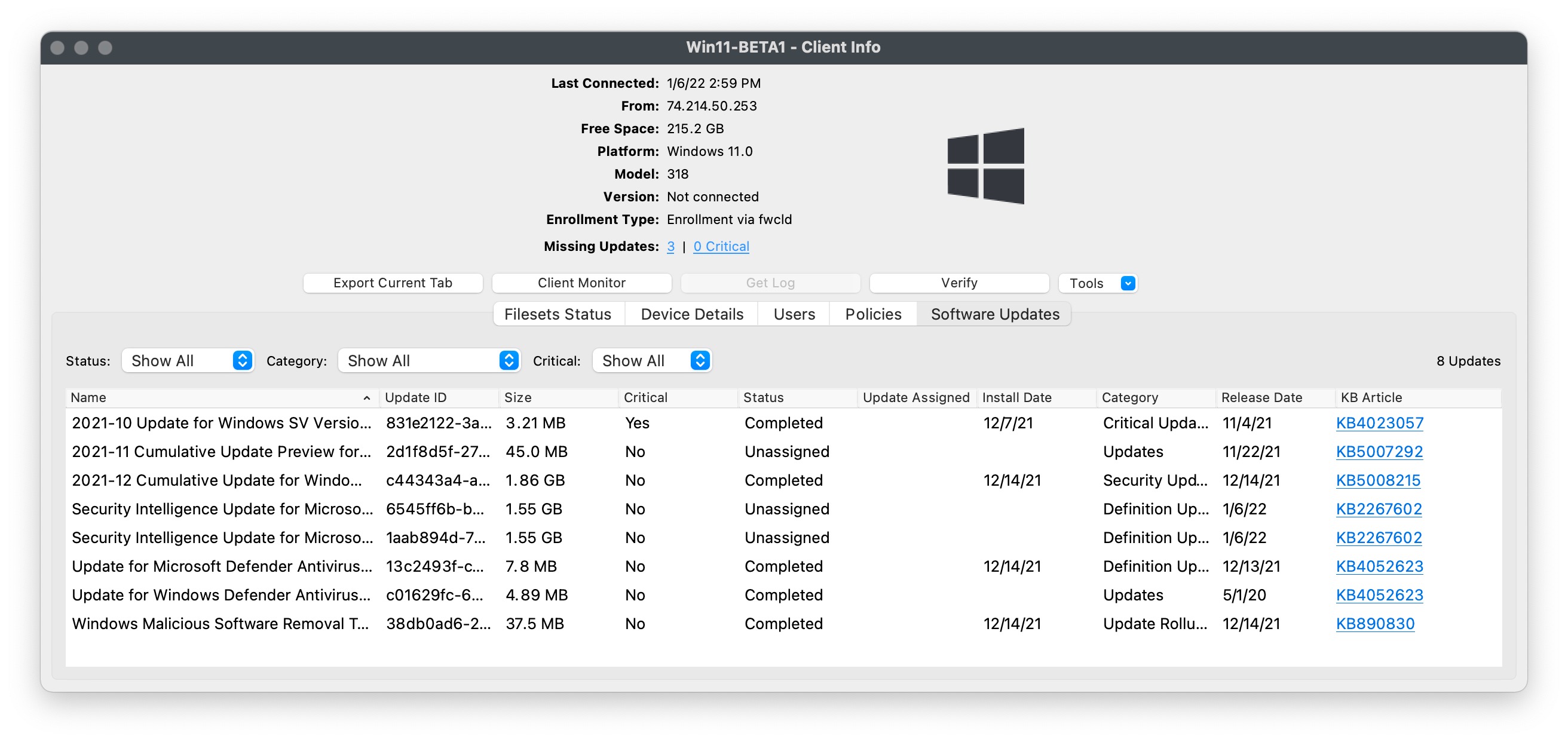
In FileWave Central, open Client Info and select the Software Updates tab.
- The Software Updates section displays all installed patches
- The Software Updates section displays all requested patches
- The device reports update status whether the patch was installed by FileWave, manually, or by another tool
- The Category property identifies the update type
It is possible to filter at the top of the table by:
- requested (default status), installed, all
- category (those with at least one result will be listed)
- critical (yes/no)
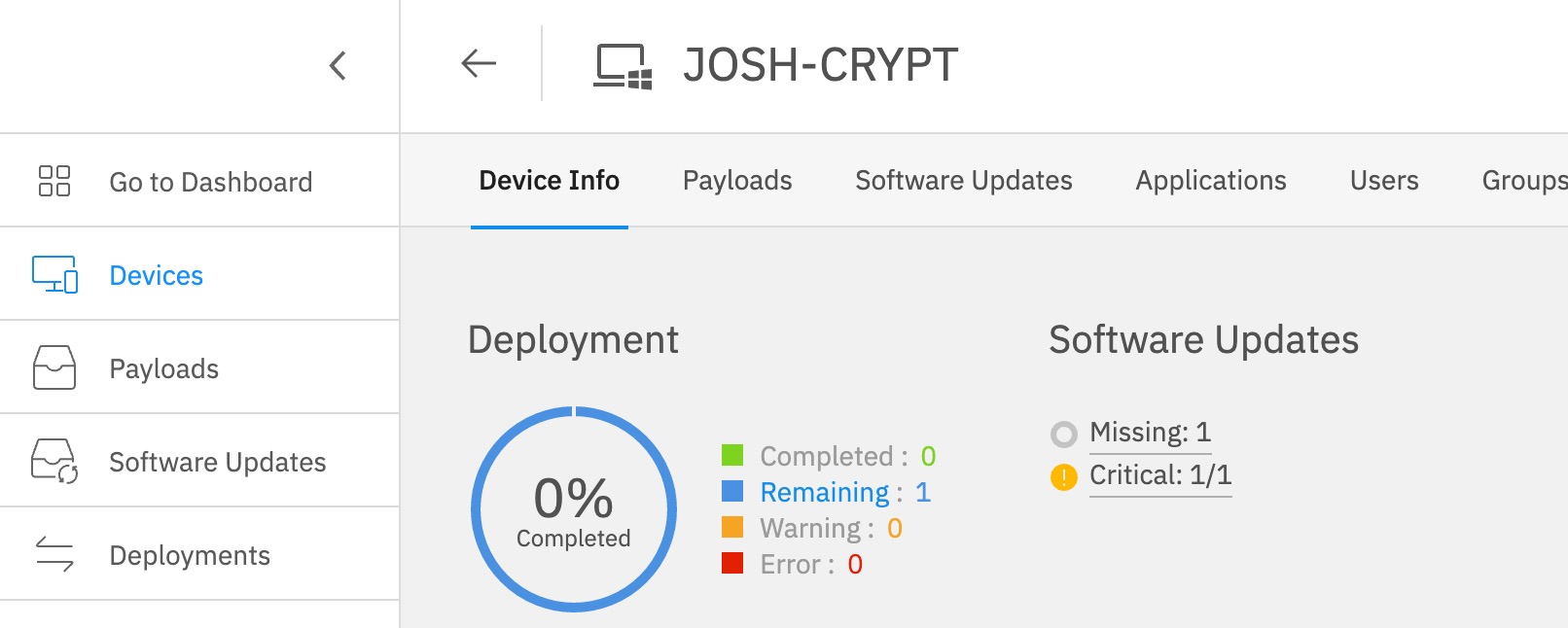
In FileWave Anywhere, the Software Updates section of Device Info summarizes missing updates:
- The overall number of missing and the number of (missing) critical updates are displayed
- Each count links to the Software Updates tab with the corresponding filter applied
- In case of no results, the value "0" is displayed, but the link does not exist
- This section is available for supported Windows devices regardless of enrollment type
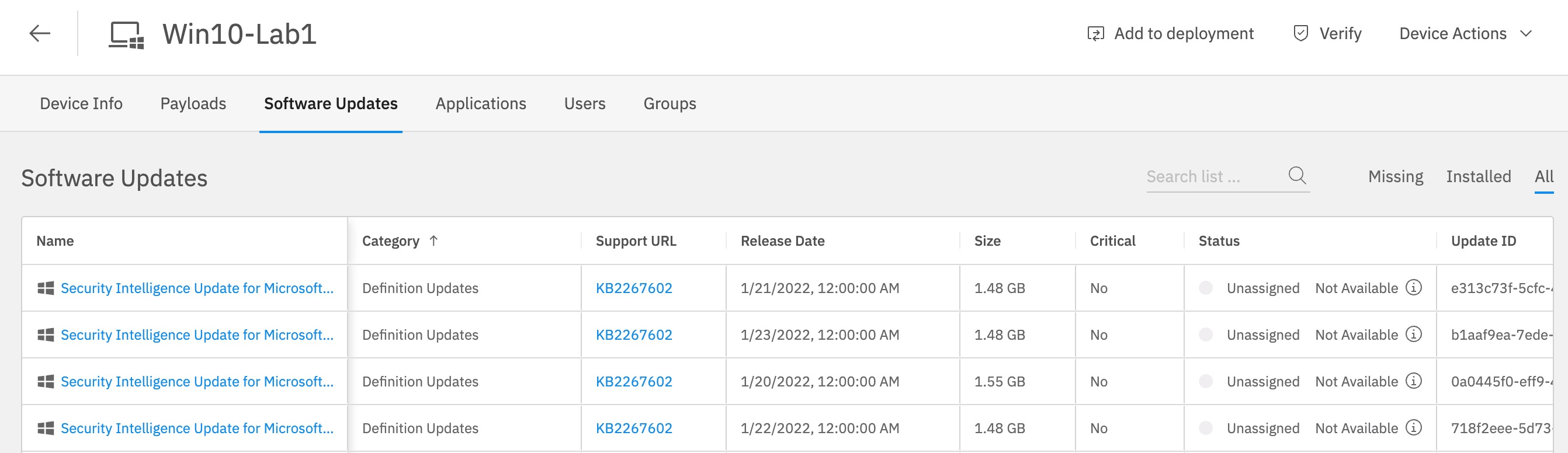
The FileWave Anywhere Software Updates tab provides additional filters for missing and installed updates.
Starting in FileWave 16.3, Windows updates deployed through FileWave Policy are labeled Triggered by Policy in the Software Update status view in FileWave Central and FileWave Anywhere. That status is also recorded in inventory for reporting and auditing.
- Filters can be applied to the whole table:
- All / Missing / Installed
- Columns can be filtered:
- Critical (dropdown)
- Categories (multiselection)
- Status (multiselection)
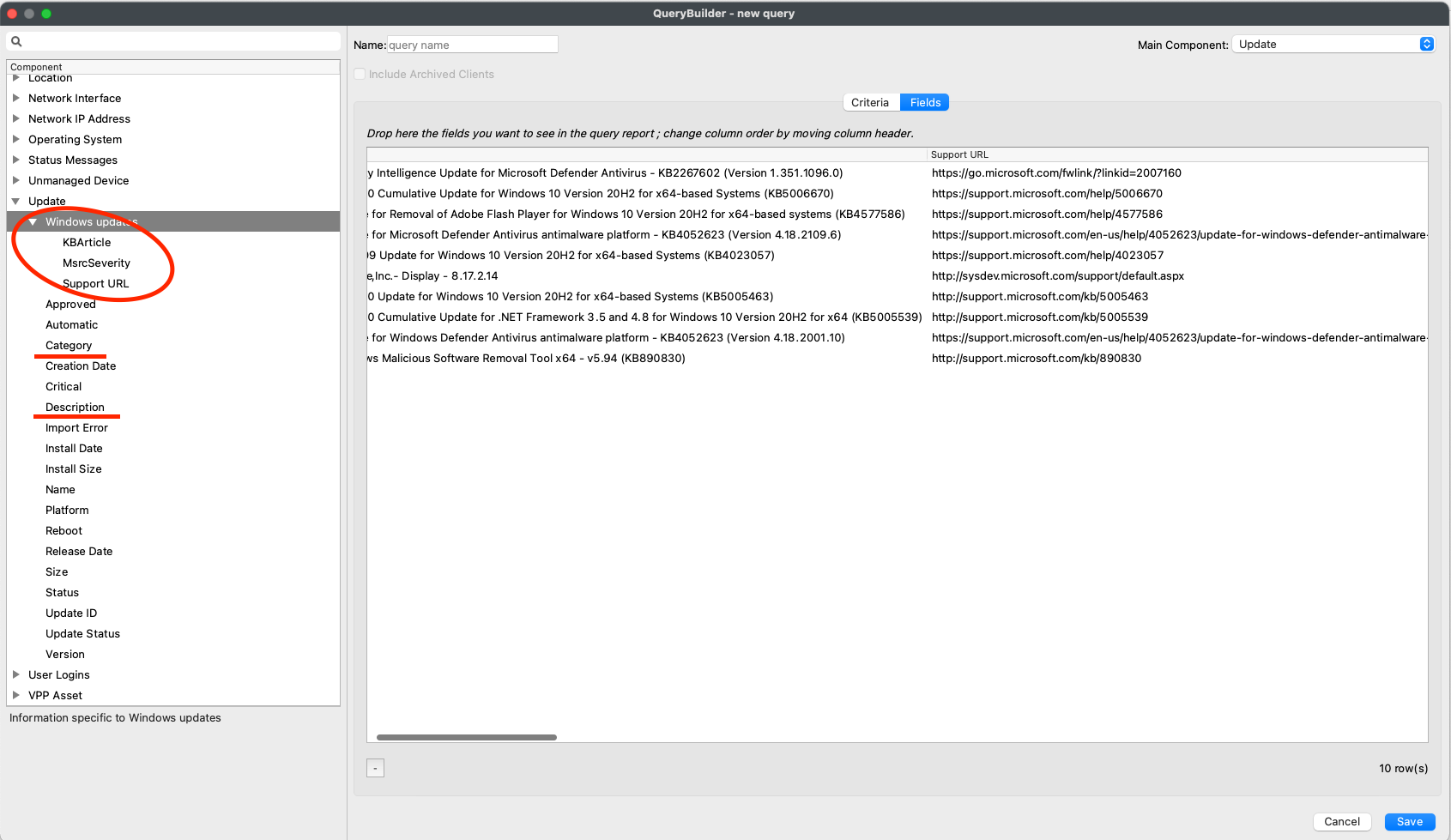
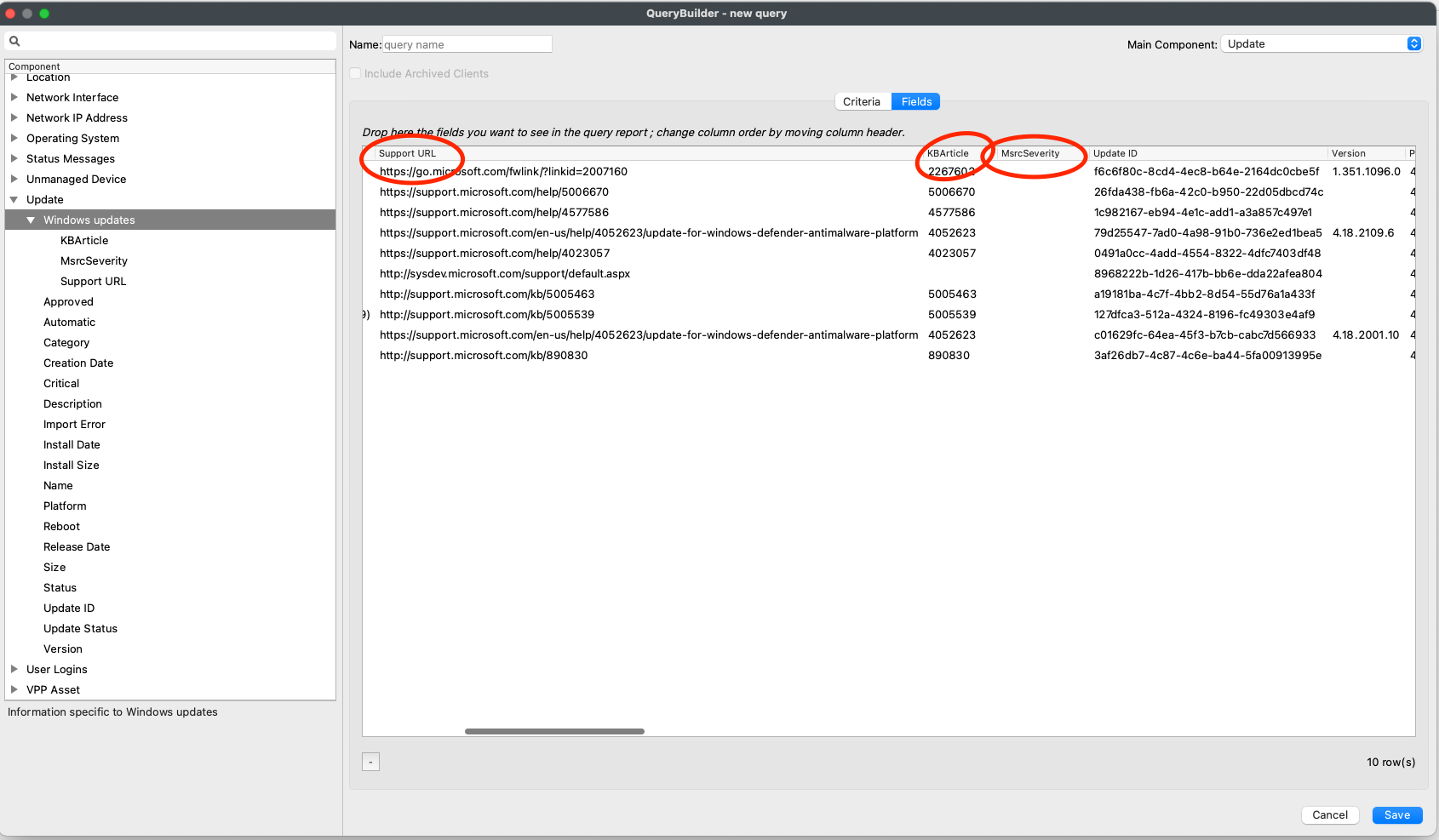
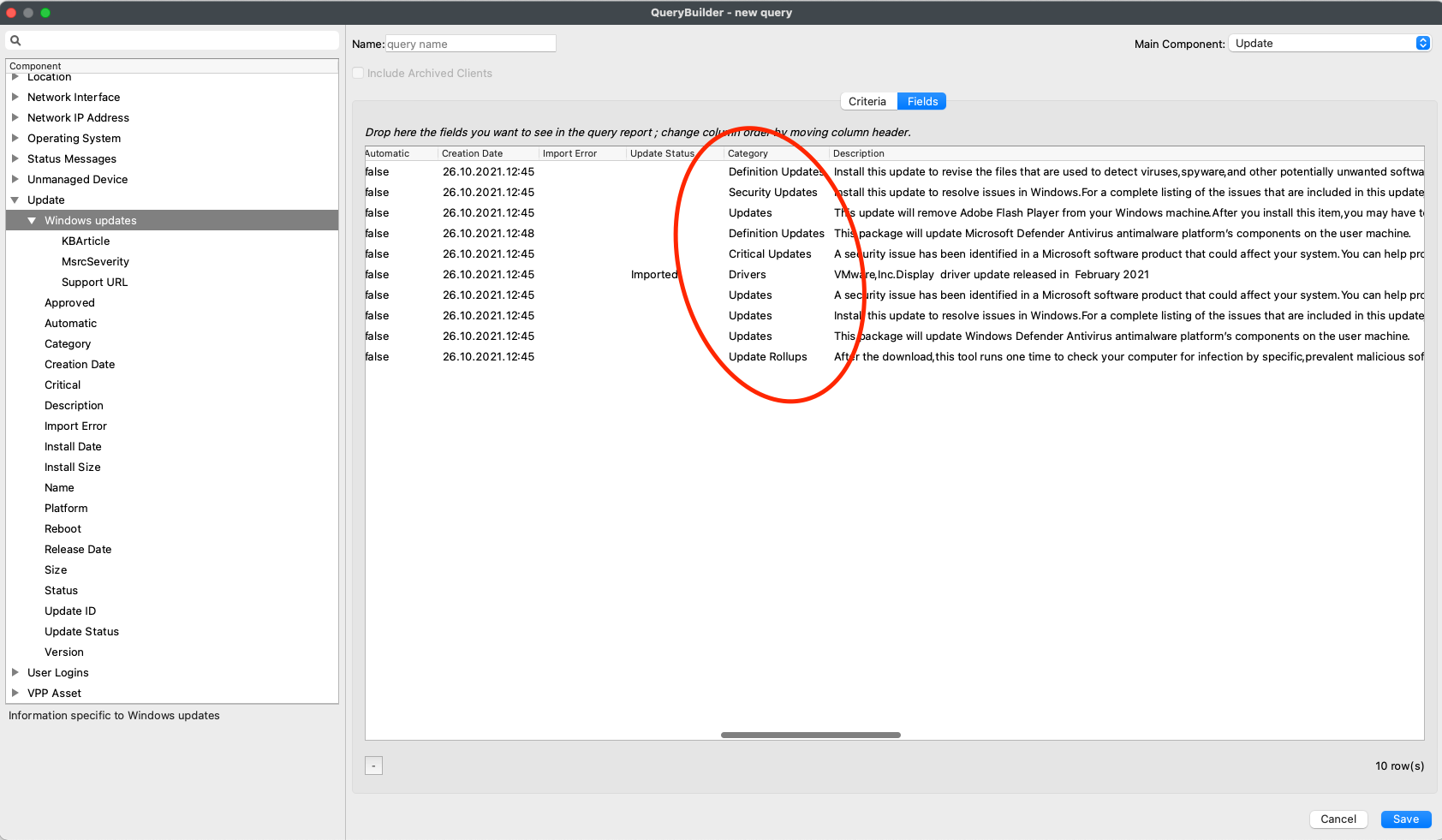
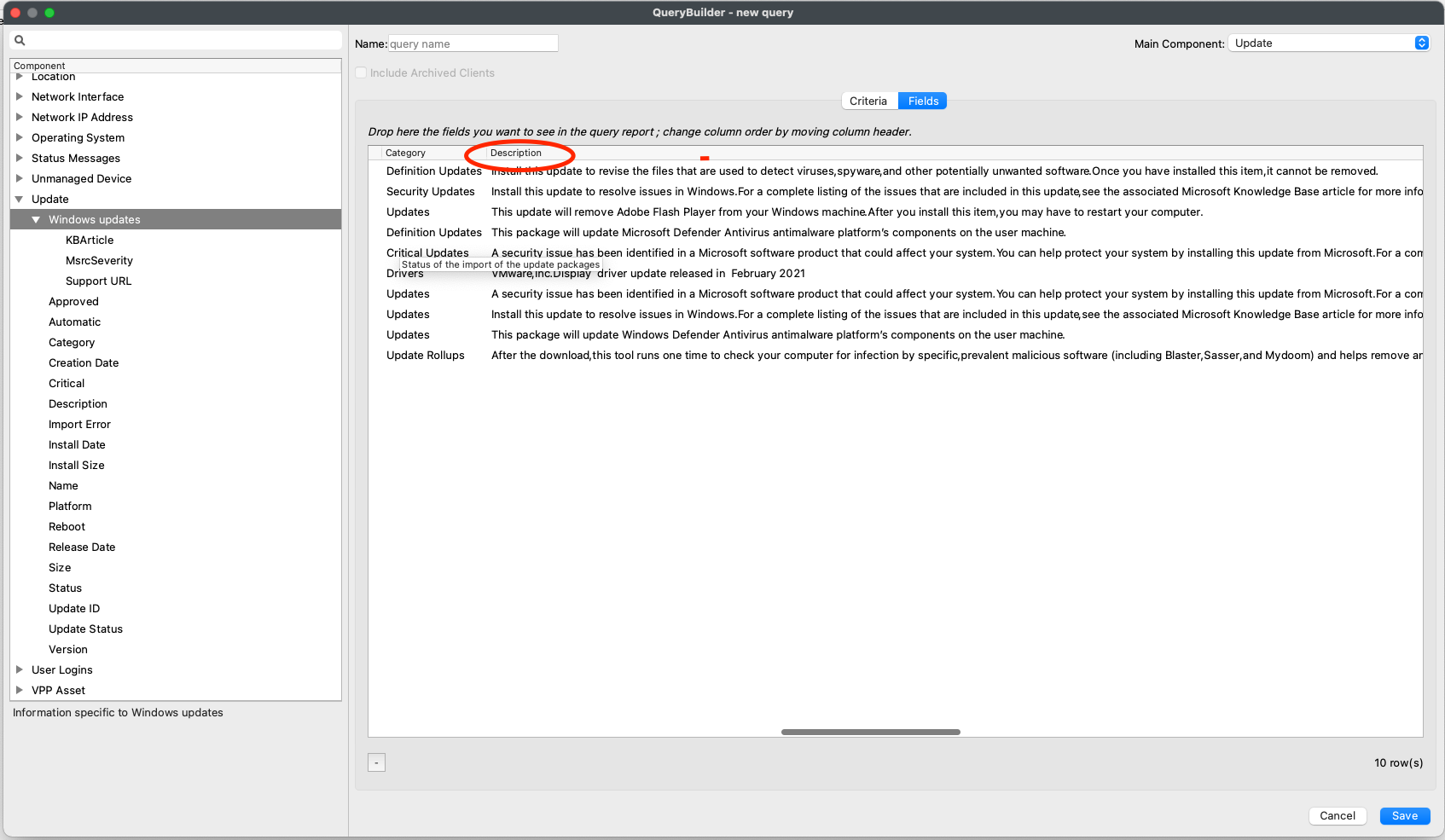
FileWave Central and FileWave Anywhere expose Windows update inventory fields for reporting:
|
As shown here KBArticle, MsrcSeverity, Support URL, Category, and Description are the new fields. |
|
|
This is an example of Support URL, KBArticle, and MsrcSeverity used in a report. |
|
|
These examples show Category and then Description. |
|
No comments to display
No comments to display