
Inventory Items in Scripts
What
- Each inventory item, including each Custom Field, has an internal name.
- Scripts can use that internal name to read inventory values supplied by FileWave.
- Add the internal name as either a launch argument or an environment variable for the script.
- This applies to Custom Field scripts, Policy Blocker scripts, and Fileset scripts.
When
Find the internal name in the Inventory Report editor (formerly the Inventory Query Editor). The example below shows the internal name ‘device_product_name’.
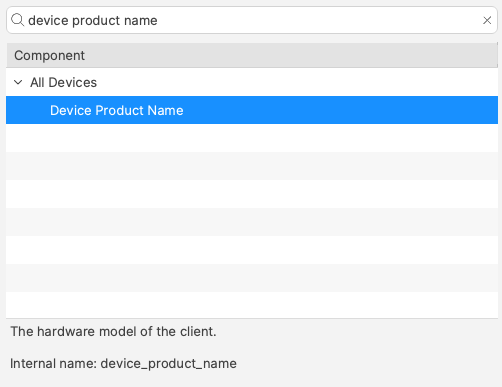
Add that value to the script as either a launch argument or an environment variable.
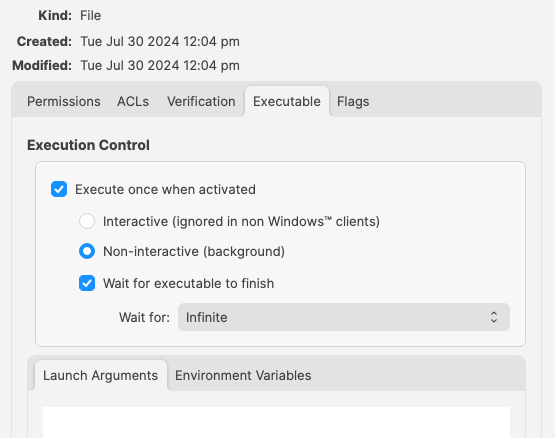
But, which should be used?
How
Either method can work. Choose the one that makes the script easiest to read and maintain:
- Launch Arguments are referenced by their numerical position
- Environment Variables are referenced by a chosen name
- Custom Fields have an abbreviated name and a full name. Custom Field names could overlap with a built-in Inventory Item.
Built-In Inventory
In most cases, environment variables are easier to read because the script can use a meaningful variable name instead of relying on launch-argument position.
For example:
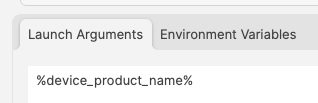
Could be referenced in a script as:
| macOS shell | echo $1 |
| Windows Powershell | echo $args[0] |
But to make the parameters more easily recognisable for anyone reading the script, it could be desirable to name them:
| macOS shell |
|
| Windows Powershell |
|
References to the provided inventory parameters in the script now makes more sense, but as mentioned, Environment Variables take this a step further:
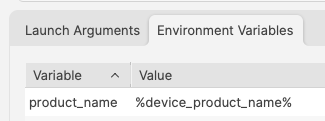
A variable name is already defined and this can be referenced in the script directly
echo $product_nameImprovements
First Improvement
To improve the readability of the script further, consider setting the variable name to match the value, e.g:
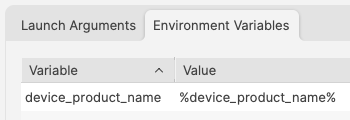
echo $device_product_nameSecond Improvement
When referencing a Custom Field in a script, it could be referenced in one of two ways.
Example Custom Field: State
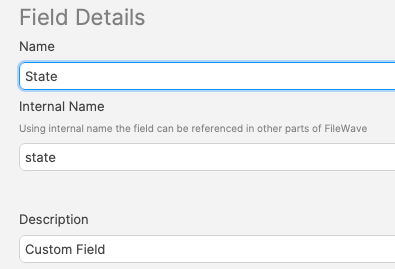
Note, the description has been used to indicate this is a Custom Field. Inventory Query editor shows Description.
This could be referenced with:
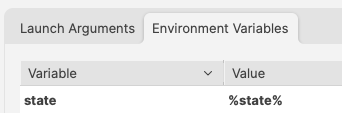
and
echo $stateHowever, there is a built-in Inventory Item called State. So there are now two Internal Names of ‘state’
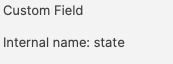

The above scripted example for 'state' would actually report the built-in value, not the Custom Field. There is, though, a hidden prefix that can be used.
This Custom Field could be referenced as either:
- %state%
- %CustomFields.state%
The latter prevents an unexpected collision with the matching built-in internal name. To make the parameters obvious when reading the script:
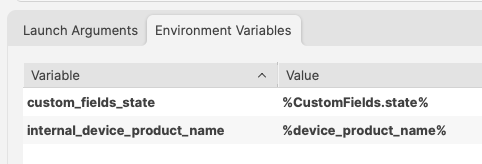
echo $custom_fields_state
echo $internal_device_product_name
Notice, despite no prefix existing for built-in Inventory Items, by including a prefix for both variables in the Environment Variables definitions, reading the script will be much clearer.
Anyone reading the script is now aware that state is a Custom Field, without having to cross reference anything. Likewise, the reader also is aware that the device_product_name also comes from Inventory, again, without any cross reference necessary.
Unknown Inventory
Not all Inventory Items are available as parameters.
The FileWave Client builds the inventory report and returns it to the server. Custom Fields, including server-side Administrator Custom Fields, are available to the client. Inventory returned only by MDM is not available to client-side scripts because the client does not know those server-side values.
%CustomFields.location%
No comments to display
No comments to display