
Device Details - Booster Client Preferences Reporting
What
Use these Custom Fields to collect stored Booster addresses and ports, tickle interval, Server address, and the Route server messages via boosters setting from macOS and Windows FileWave Clients. These are configuration values, not a live connection test or a measurement of the current upstream server.
When/Why
After deploying Boosters, compare the reported settings with the configuration you intended. The supplied fields do not measure memory usage or identify the active upstream connection. A configured Booster address or enabled routing flag alone does not prove that a Client is currently using that Booster. For the meaning and limits of message routing, see What are Server Messages and why do I want them?.
How
Download and extract the ZIP below, then select Client Prefs.customfields in FileWave Central under Assistants > Custom Fields > Edit Custom Fields… > Import. See Import and Export Custom Field Definitions for assignment and import-conflict handling. The included fields have Assigned to all devices enabled by default. Clear it before saving if you want to assign the fields only to selected devices or groups.

After importing, assign the Custom Fields to the devices you want to include in the report.
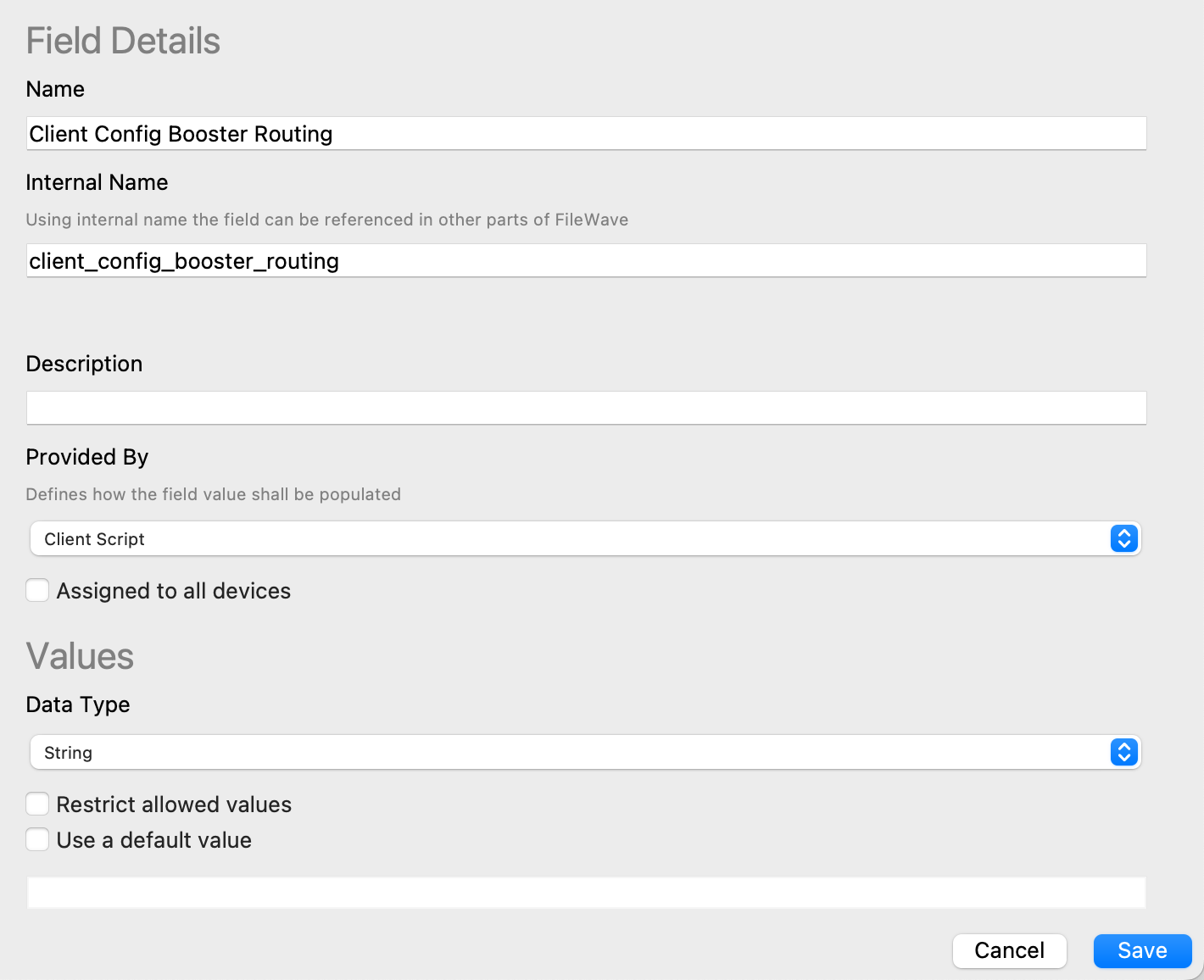
Clear Assigned to all devices on imported fields you do not intend to collect fleet-wide, then click Save. Use Edit Custom Field Associations to assign the required reporting fields to a small test group first. After confirming their values on each intended platform, expand assignment if a fleet-wide configuration report is needed.
Give the devices time to check in and acquire the new custom fields to report their data values.
As each device checks in, view these values in FileWave Client Info > Device Details. Scroll to Client Config Booster1, Booster2, and related fields to see what the client reported. The screenshot below shows an example Inventory Report (formerly Query) for the routing setting, configured Booster addresses, and tickle interval—not proof of active connections.
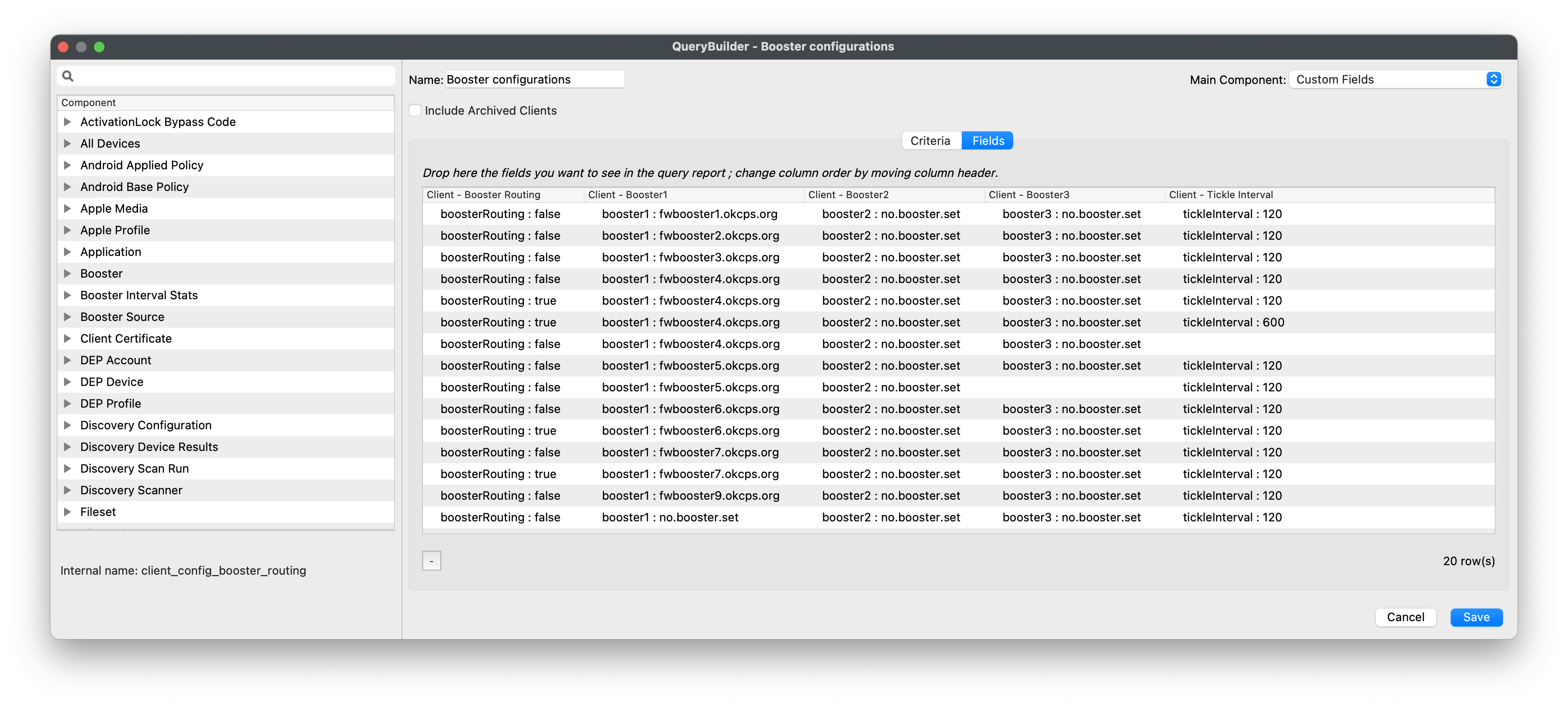
After the fields populate, build Reports to find missing or unexpected Booster settings. Compare the reported values with the intended configuration and a recent inventory submission before drawing conclusions about a device.
Digging Deeper
The macOS scripts read the Client property list; the Windows scripts read the Registry and assume a 32-bit PowerShell Registry view. Check the imported interpreter and compare a pilot result with the actual Client settings before broad assignment. The scripts end with a success exit even if a setting was not returned, so a blank value or successful script exit is not proof of a valid configuration. Check field assignment, script output, and the latest inventory submission when values are missing or stale. These fields collect settings; they do not change Booster configuration. Use Improved Server Message Routing for the configuration workflow.
No comments to display
No comments to display