
APNs Certificate Creation & Renewal on macOS
Description
FileWave uses an Apple Push Notification service (APNs) certificate to communicate with managed Apple devices. Apple requires this certificate to be renewed every year.
Renew before expiry
An expired APNs certificate stops FileWave from sending MDM commands to Apple devices, and Update Model cannot restore that communication until the certificate is renewed. Record the owning Apple Account and schedule renewal well before the expiration date.
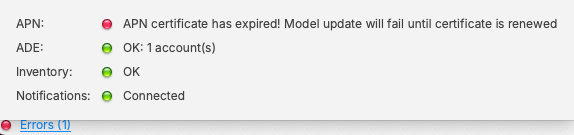
Use the FileWave Central/Server 17 wizard below as the primary route. The manual macOS Keychain procedure remains available for earlier releases or when you need to prepare and upload a certificate/key pair manually. Choose one route; the manual steps are not prerequisites for the wizard.
Preserve the APNs topic
Renew the existing certificate with the same Apple Account and the same certificate/topic. A different topic replaces the management identity, disconnects enrolled devices, and requires re-enrollment. Stop on a mismatch; do not treat replacement as renewal.
FileWave 17: create or renew in Central
Use this route with FileWave Central and Server 17.0 or later. Central prepares the signed Certificate Signing Request (CSR) and installs the certificate returned by Apple. You still sign in to Apple's portal and choose whether to create or renew a certificate. You do not need Keychain Access, OpenSSL, or a manually prepared .p12 file for this route.
Before you start
- Connect to the intended Server with an administrator account authorized to manage its APNs certificate. Check the currently installed certificate's topic and expiration before creating anything. If it is already valid and no renewal is needed, keep it.
- Have a valid FileWave license. The Server must be able to reach FileWave's signing service at
csr.filewave.com, which validates the license through FileWave's licensing service. Your administration workstation must be able to open Apple's Push Certificates Portal. - Use an organization-controlled Apple Account. For renewal, you need the account that owns the installed certificate and the same certificate in that account. Record the account, Server, topic, and renewal date securely; do not store the account password with certificate files.
Renewal must preserve the topic. Replacing the current certificate with one that has a different topic disconnects enrolled devices and requires them to re-enroll. If Apple or Central shows a different topic, stop and locate the existing certificate with its owning Apple Account. Do not use the topic-check override as a routine renewal remedy. If you cannot regain access, contact Apple Deployment Programs Support before creating a replacement.
Use the wizard
- In FileWave Central, open Preferences > Enrollment > Apple. In the Apple Push Notification Certificate section, click Renew / Create APN Certificate…. The wizard opens as Renew / Create APN Certificate. Older Central examples call the Enrollment tab Mobile; Enrollment is the name from 16.4.1 onward.
- Review the current certificate information and the Apple Account to use, then click Next. FileWave prepares the signed CSR; follow the wizard's file-manager and browser handoff to the signed request and Apple's portal. Keep that request available for the upload at Apple.
- Renew an existing certificate: sign in to Apple's portal with its owning Apple Account. Open the certificate's information and compare its Topic (Subject DN) with the current topic in Central. Only when they match, choose Renew for that certificate and upload the signed CSR from the wizard. Download the renewed certificate. Do not choose Create for a routine renewal.
- First creation only: if this Server has no APNs identity to preserve, sign in with the organization-controlled Apple Account, choose Create a Certificate, accept Apple's terms, and upload the signed CSR from the wizard. Download the new certificate. This is an alternative to the renewal step, not an additional step after it.
- Return to the wizard's Download and install the certificate screen. If the downloaded certificate has not been picked up, use Select Downloaded Certificate… to select Apple's downloaded PEM certificate. Stop if a topic-mismatch warning appears; return to the correct certificate and account rather than overriding it.
- When the wizard reports The APN certificate was installed successfully., review the displayed subject/topic and expiration, then click Finish. Check the current certificate in Preferences and click OK to close Preferences. For renewal, the topic must be unchanged and the expiration extended.
Continue with verification and renewal reminders. Do not also perform the manual procedure below after completing the wizard.
If signing fails, check license validity and the Server's connectivity to the signing service. If Apple's portal does not open, open the portal on your workstation and use the signed request provided by the wizard. Do not create a different Apple certificate to work around a signing or account-access problem.
Manual macOS Keychain route
Use this branch for FileWave versions before 17 or a deliberate manual certificate/key upload. The screenshots illustrate the older manual interface. From Central 16.4.1, use Enrollment > Apple; older versions use Mobile > Apple. Complete this branch instead of the wizard, not in addition to it.
Creating the Certificate Signing Request (CSR)
-
Open Keychain Access, located in: Applications > Utilities > Keychain Access.app.
-
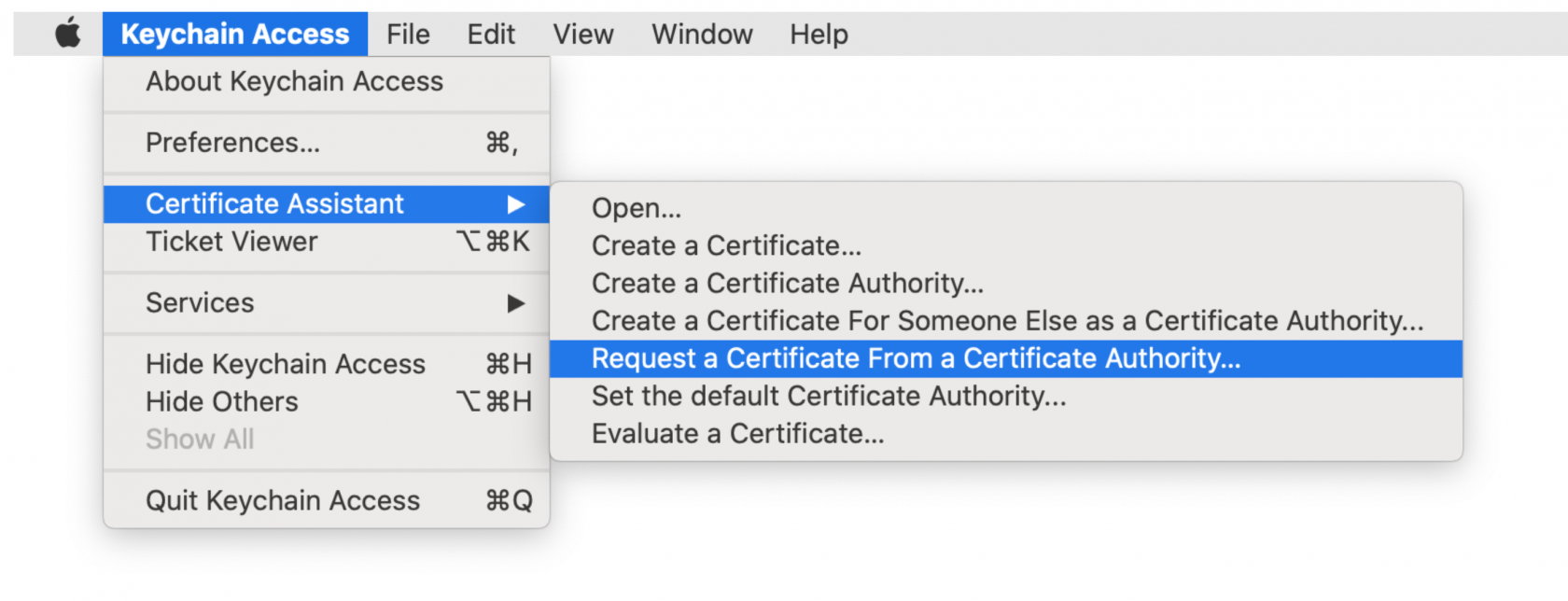
Create a CSR. Keychain Access > Certificate Assistant > Request a Certificate from a Certificate Authority...
-
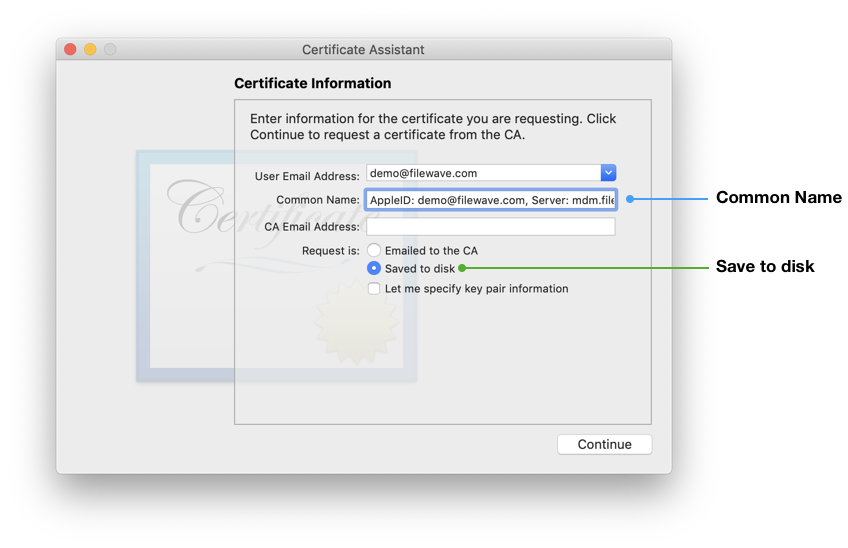
In the Common Name field, enter the Apple Account and FileWave Server name that will be associated with this certificate.
Common Name
Certificate Private Key names are visible in Keychain and the Common Name is used to set the Private Key name. Supplying the Apple ID and Server as the Common Name, ensures the Apple ID used to generate the certificate will be stored for future reference.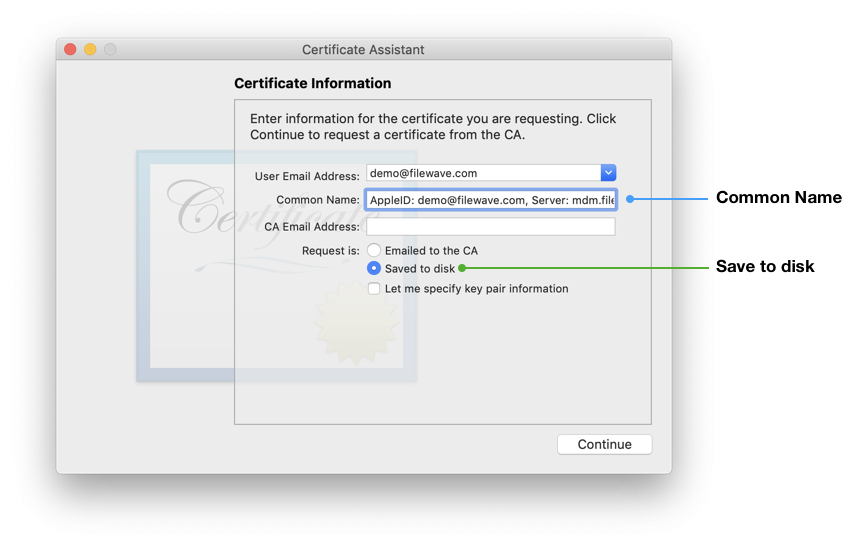
-
Select the radio button "Saved to disk" and click Continue.
-
Save the CSR request, ready to upload to FileWave in the next section.
Certificate storage
Store the CSR, signed CSR, downloaded certificate, and exported.p12in a restricted location organized by server and renewal year. Record the owning Apple Account without storing its password beside the certificate files.
Sign the CSR
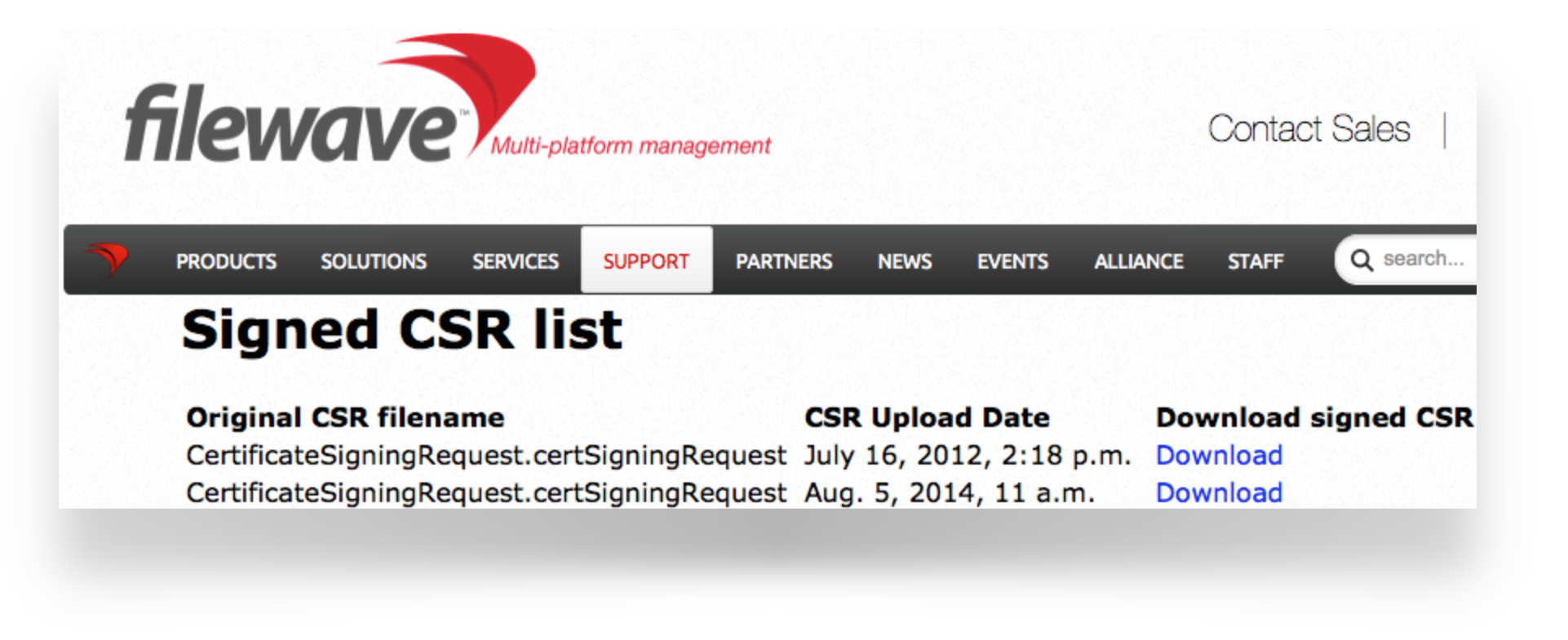
CSR requests must be signed before uploading to Apple. FileWave has a portal for this process, which requires an active FileWave account.
Upload the signed FileWave CSR to Apple
Creating a new Certificate
If you are renewing a certificate then jump to Renewing a Certificate
-
Navigate to: https://identity.apple.com/pushcert/ and log in with an Apple ID.
This Apple Account owns the certificate and is required for every renewal. Use an organization-controlled account rather than a personal account so staff changes do not put renewal access at risk.
-
Click 'Create'.
-
'Accept' Apple's 'Terms of Use'.
For first creation, continue directly to upload the signed CSR. The following account/topic checks apply only to renewal.
Renewing a Certificate
To confirm the certificate, compare the Subject DN (Topic) and current certificate.
Clicking the 'i' button will show the certificate details, including the Topic:
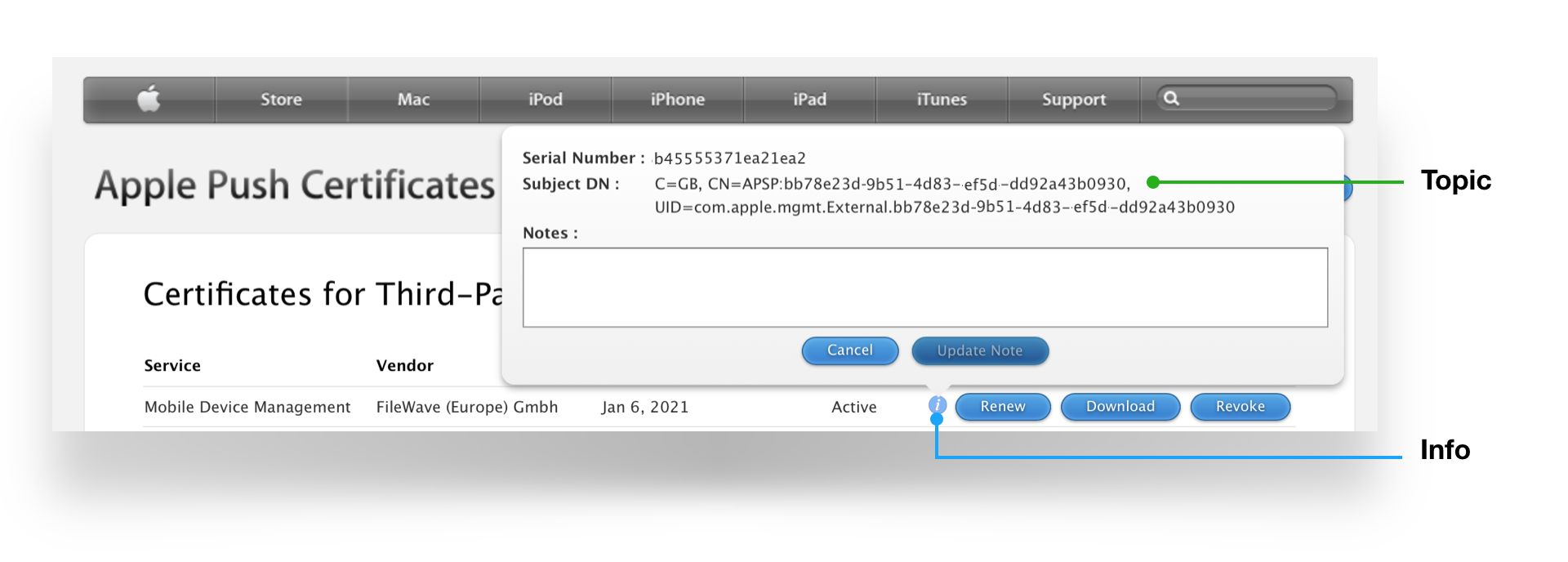
Confirm that the topic matches Current Certificate in FileWave Central > Preferences > Enrollment > Apple > Apple Push Notification Certificate:
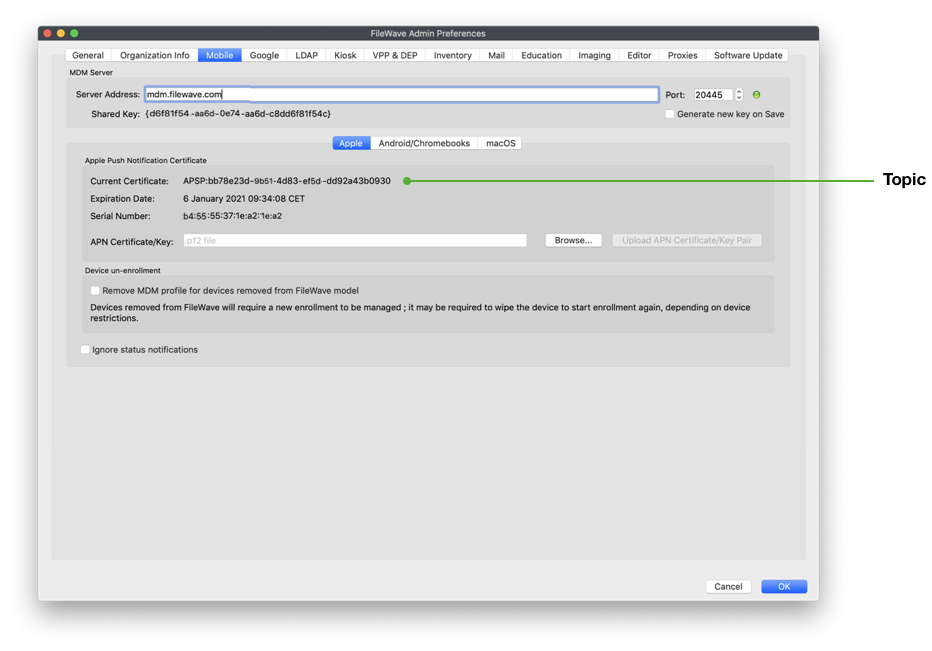
If the topics do not match, stop. If the correct certificate is not listed in the Apple Push Certificates Portal, verify that you signed in with the Apple Account that owns the current certificate. The Keychain private-key Common Name may identify the account recorded during the original setup.
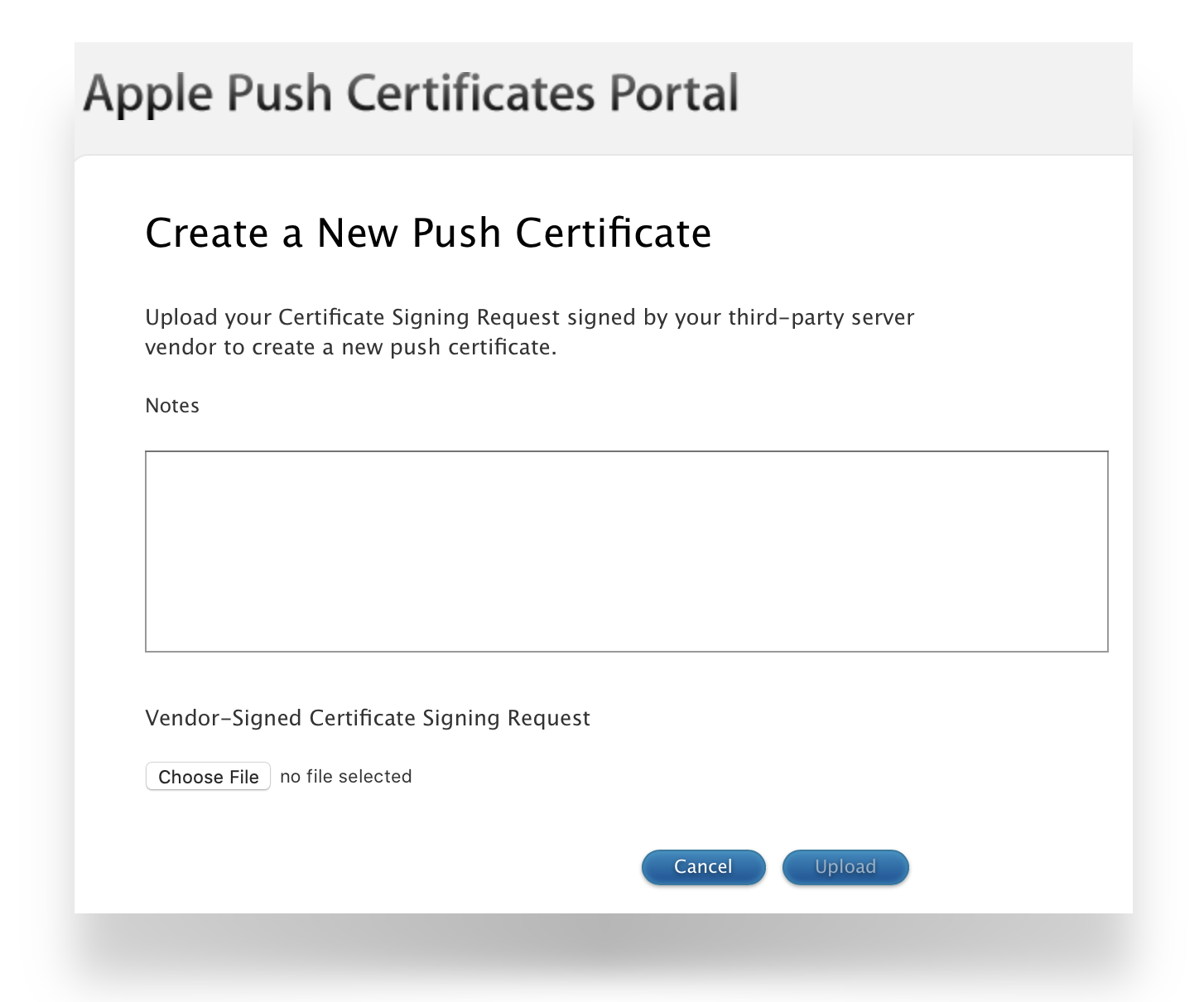
For renewal, select Renew only after confirming the topic matches. For either first creation or renewal, click 'Choose File' and browse to the signed FileWave CSR from the previous section.
Click 'Upload' and Apple will return a 'Confirmation'.
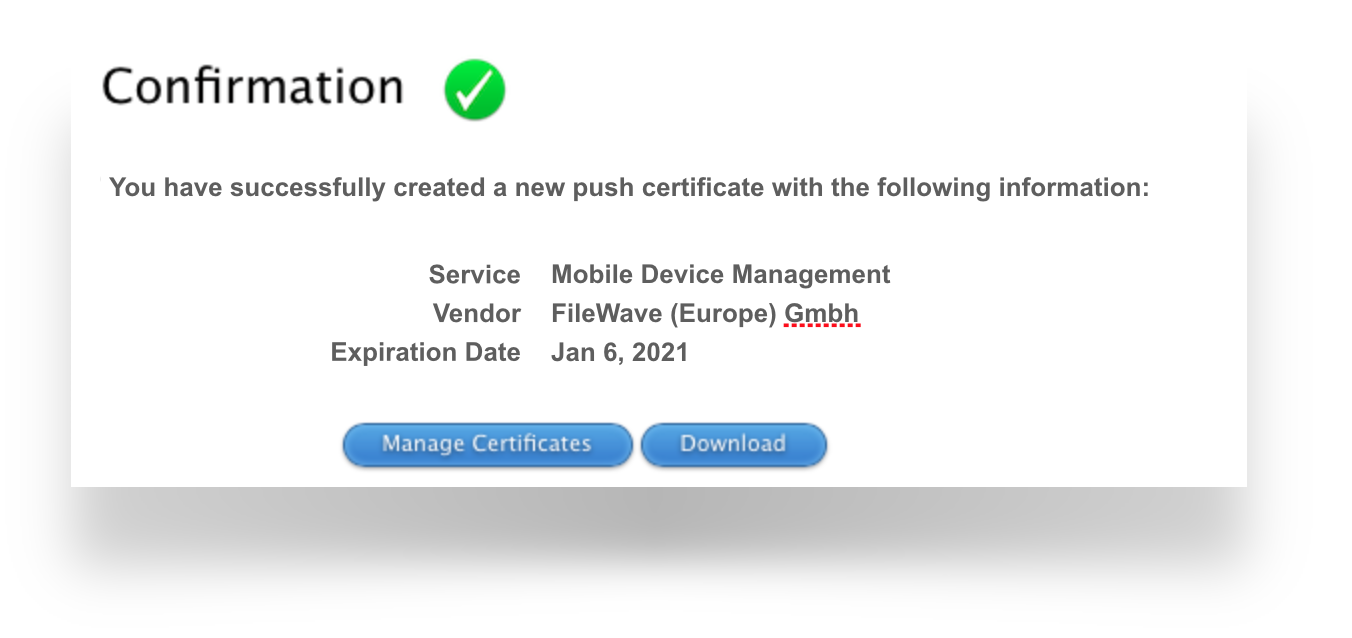
Click 'Download' and save the ".pem" file. Again consider where this certificate is stored.
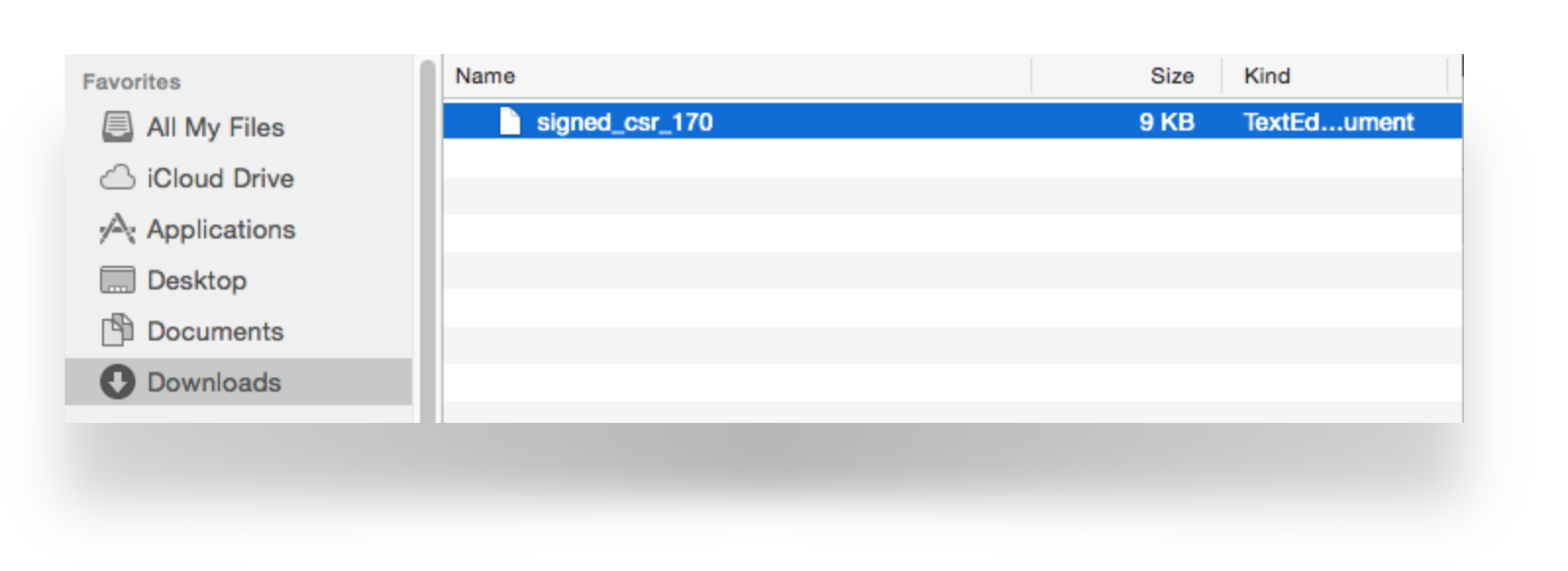
Create a ".p12" from the Signed CSR
-
Open Keychain Access app, select login from the Keychains list and then choose 'My Certificates' tab.
Keychain
If imported into the System Keychain, the Private Key will not be accessible. If 'All Items' tab is selected, private keys will not be available! -
Drag the downloaded PEM file into the Keychain main window.
-
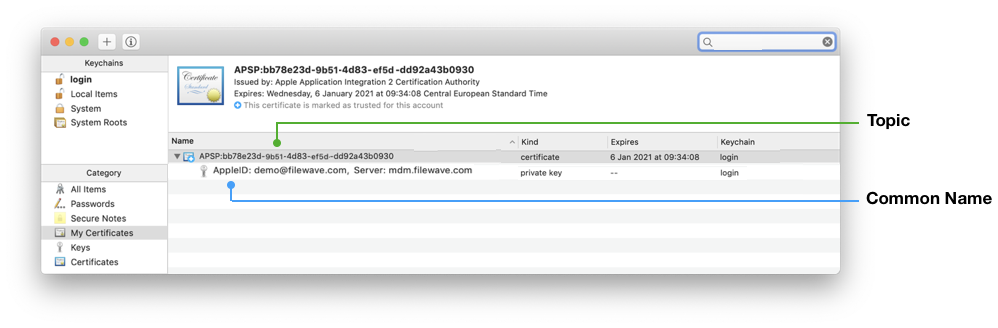
Locate the imported certificate. It will begin with "APSP:".
-
Click the disclosure triangle and select the expanded private key.
Common Name and Topic
The name of the Private Key will show the value defined as the "Common Name" from the creation of the CSR. Where recommendation was followed, this should list the Apple ID and Server name. Additionally the name of the Certificate is the same as the Topic.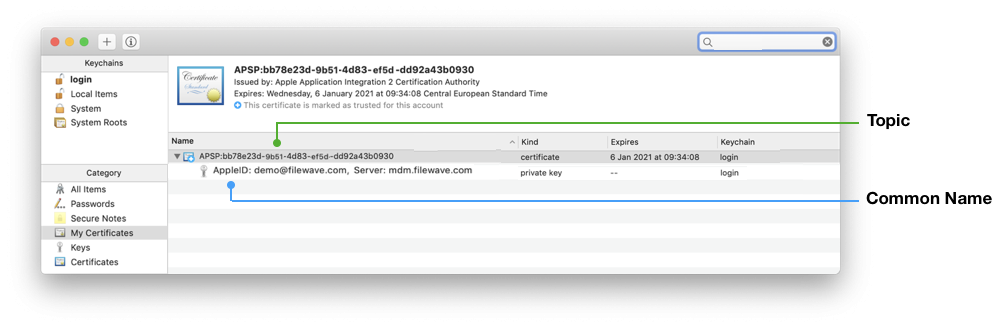
-
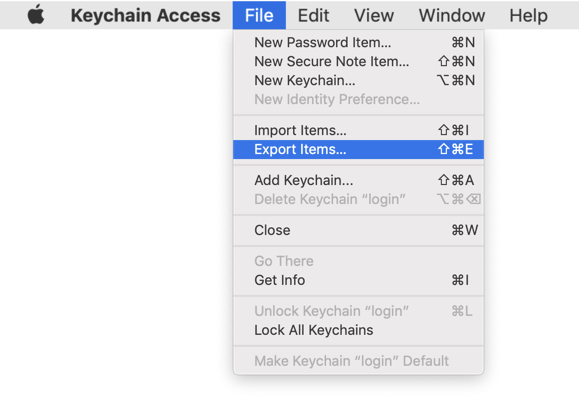
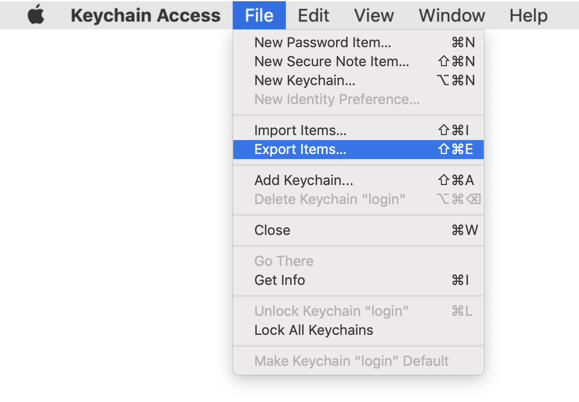
From the 'File' menu, choose 'Export Items...'.
-
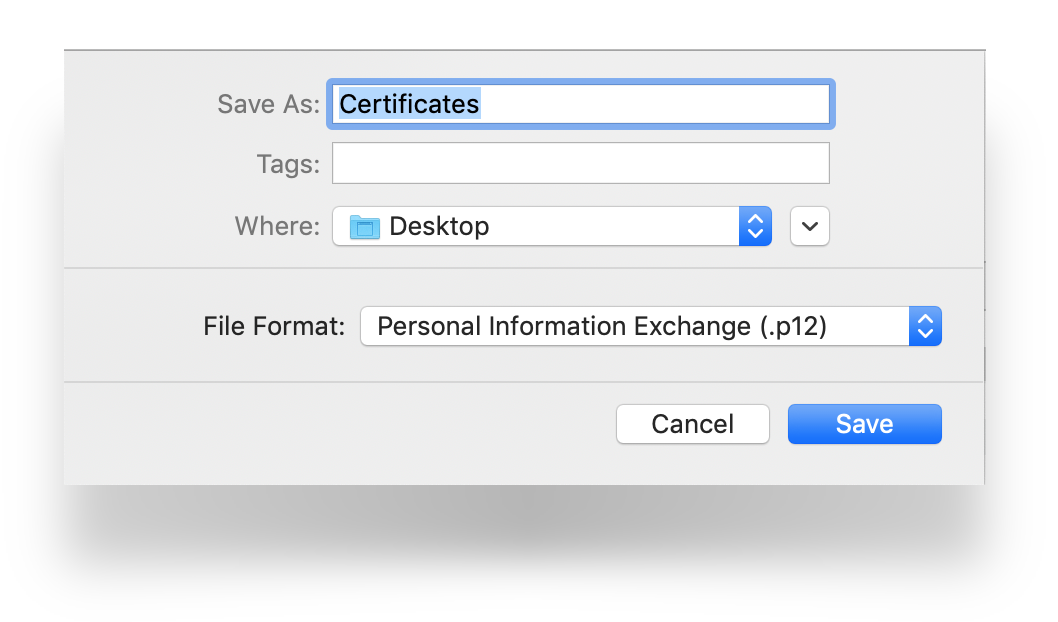
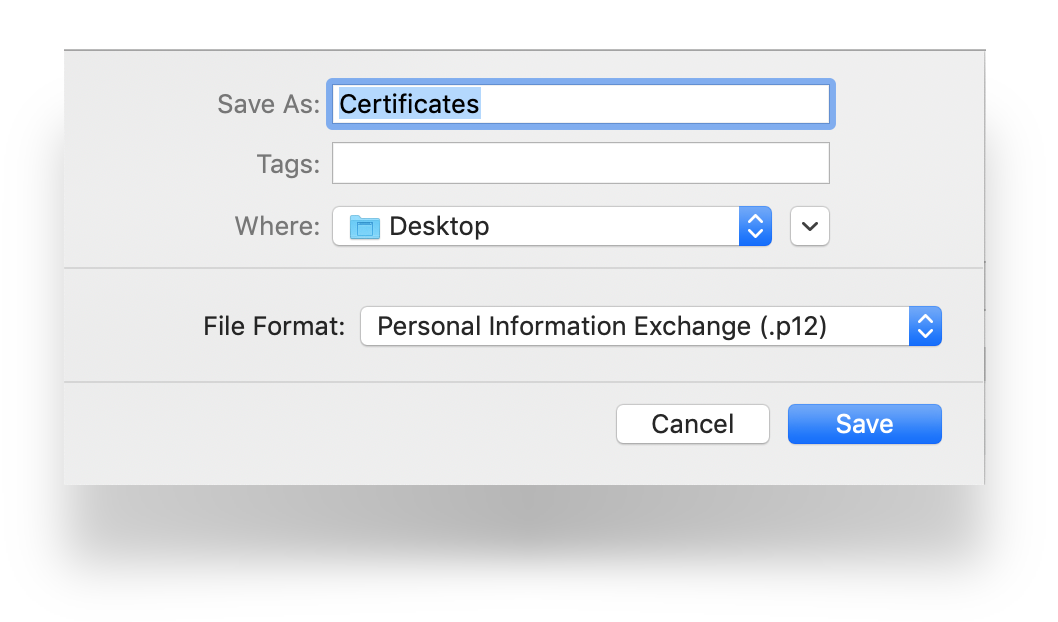
Export as a .p12 file. Again consider where this certificate is stored.
-
Click Save.
-
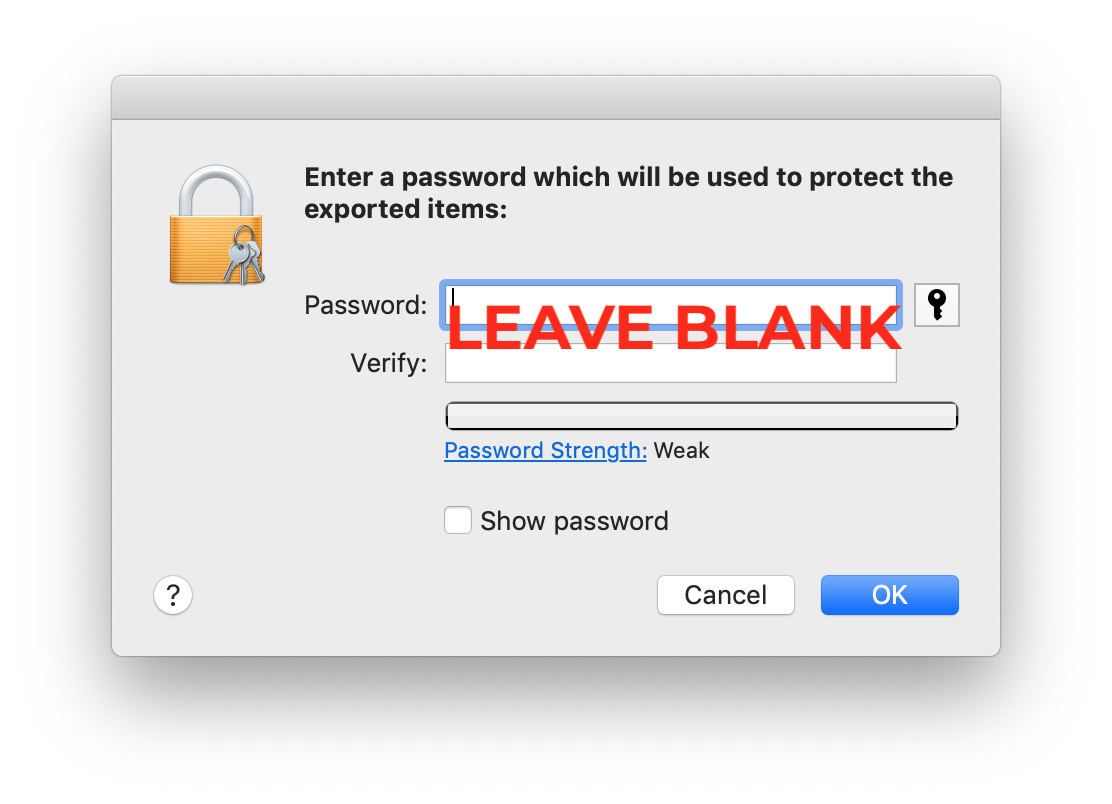
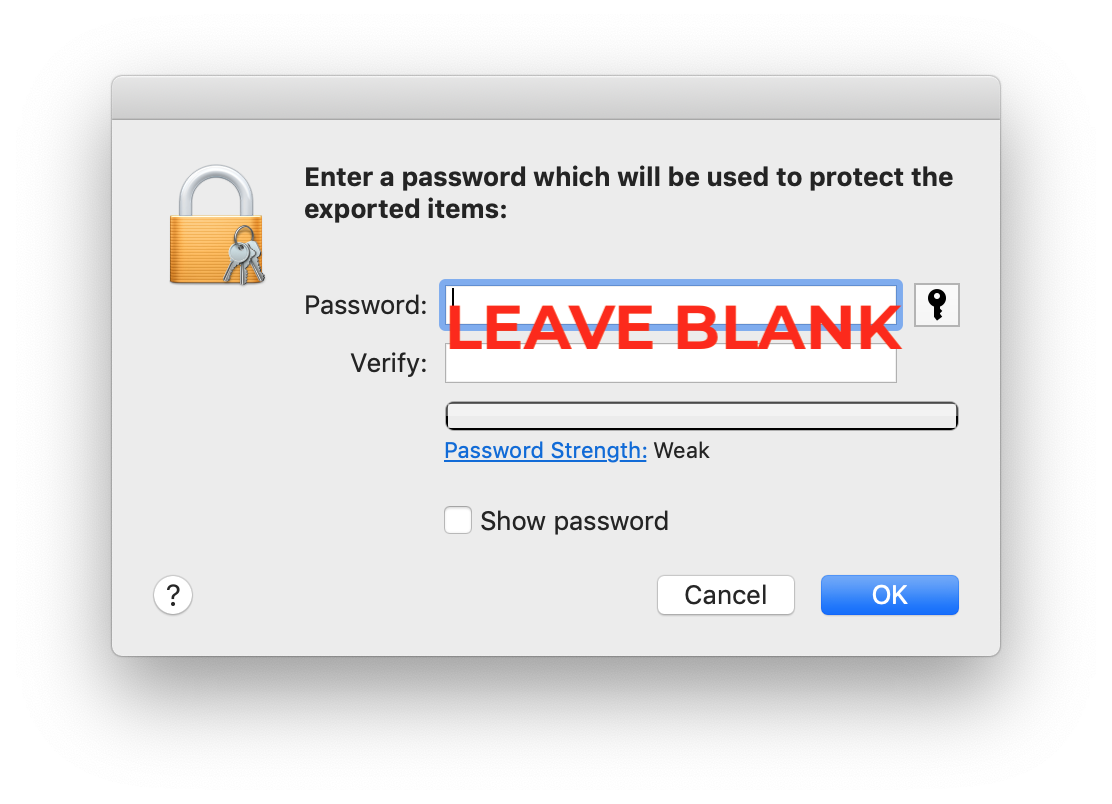
Leave the password blank.
-
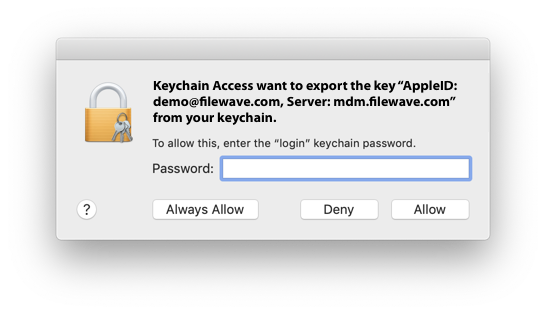
Enter your local admin account, when prompted, allowing Keychain to export.
Uploading the Certificate into FileWave
-
Open FileWave Central and sign in to the FileWave Server.
-
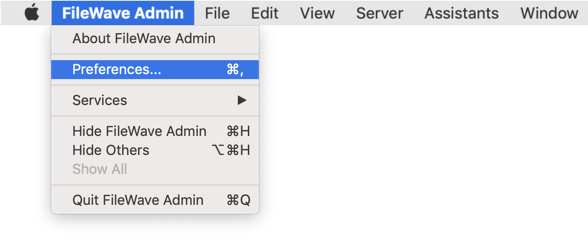
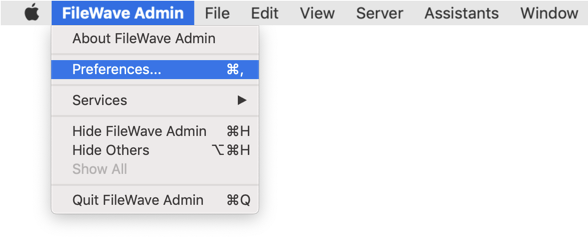
Open FileWave Central Preferences.
-
Select Enrollment > Apple (or Mobile > Apple in older versions).
-
Click 'Browse' and navigate to the saved ".p12" APNs certificate.
-
Select the exported ".p12" certificate.
-
Click 'Upload APN Certificate/Key Pair'.
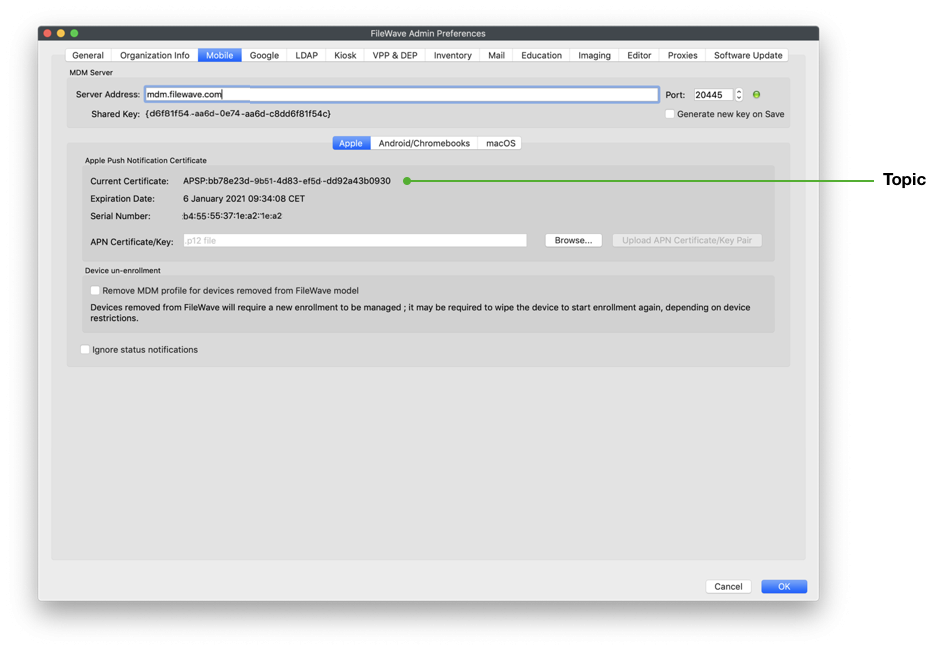
Before accepting the upload, FileWave Central compares the new topic with the current topic and warns when they do not match:
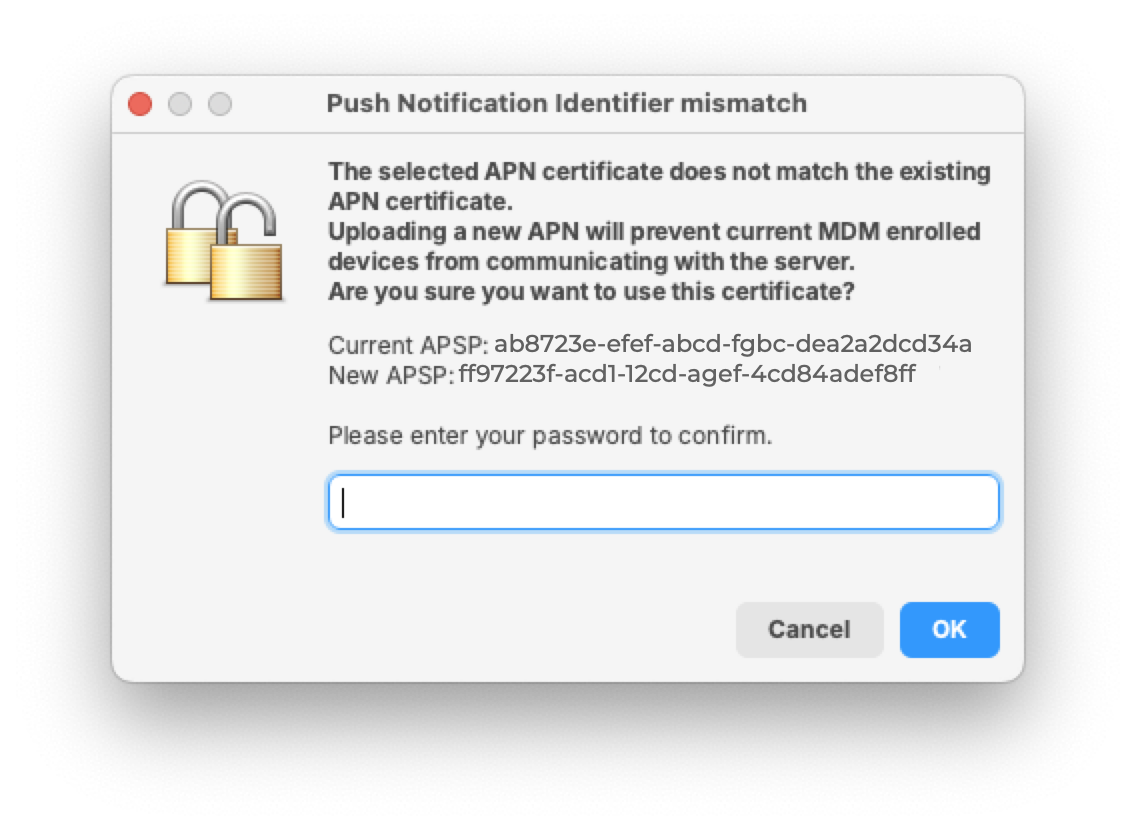
Click 'OK' to save and close the Preferences dialog.
Check the installed topic and expiration, then complete verification and renewal reminders. A Model Update is not a required certificate-installation step.
Set a renewal alert
In FileWave Central, open Dashboard > Alert Settings and add APN for MDM. Email alerts also require working Server Mail Preferences. Keep a separate calendar reminder tied to the certificate owner so the renewal does not depend on one alert channel.
Verification and renewal reminders
After either route, check the certificate displayed in Central: the intended topic, a future expiration date, and no certificate error. For a renewal, compare the topic with the value recorded before you started and confirm that the expiration has advanced. Review existing MDM status and recent command history for certificate errors without sending a new command. A successful install and the displayed certificate establish configuration readiness; they do not by themselves prove a device has received management work.
Do not run Update Model merely to refresh the certificate display or commit an APNs installation. A Model Update is a separate management operation that can release pending device work; it is not a harmless certificate check. If you later need an end-to-end device test, plan that separately with the device and pending work in scope.
Record the owning Apple Account, unchanged renewal topic, and new expiration in your protected administration records. Set a calendar reminder before the annual expiration. In Central, use Dashboard > Alert Settings > APN for MDM for an additional alert; email delivery also requires working Server Mail Preferences.
Contact Apple for help
If you cannot identify or access the Apple Account that owns the certificate, contact Apple Deployment Programs Support before creating a replacement certificate.
Contact Apple for help with APNs certificates
No comments to display
Regarding the statement in the article:
APNs Expiry If APNs certificates are allowed to expire, all MDM communication will be lost, until addressed.
While it is accurate, it would be "more helpful" if some additional text was provided as to WHO the customer needs to contact to address it? FileWave? Apple (and if by Apple, is there a particular Apple group that should be contacted)?
It is up to the customer to address the renewal of the certificate. I'll change the wording to 'until renewed' in case no one else understands that.
Mac OS - FileWave APNS Certificate Creation with SSL.com and XCA
This guide explains how to create the Apple Push Notification Service (APNS) certificate for FileWave using an online CSR generator and the XCA certificate management tool, instead of the Apple Keychain. The Apple Keychain often causes issues with private key handling on newer macOS versions, so this method provides a more reliable alternative. You may use any online CSR generator (for example ssl.com), it does not have to be ssl.com specifically.
Prerequisites
Step 1: Generate CSR (Certificate Signing Request)
⚠️ Keep the .key file safe – you will need it later in XCA.
Step 2: Sign the CSR with FileWave
Before the CSR can be uploaded to Apple, it must be signed by FileWave.
Step 3: Upload the signed FileWave CSR to Apple
Creating a new certificate
Renewing an existing certificate
⚠️ If the topics don’t match, stop – the wrong Apple ID may have been used.
Step 4: Import and process the certificate in XCA
Step 5: Import the certificate into FileWave
Step 6: Verification
In reply to #3
Thanks so much for this. I've created https://kb.filewave.com/link/1090#bkmrk-page-title that is it's own standalone article based on this.
Looks like a correction may be needed:
The topic should match the previous topic. FileWave Central should warn if the topics do match before accepting the upload:
possibly should be:
The topic should match the previous topic. FileWave Central should warn if the topics do not match before accepting the upload:
In reply to #5
@Troy Yochelsonyou are right. I just added the missing "not" there. Thank you.
No comments to display