
IdP for Deployments and Smart Groups
What
Use IdP group data from enrolled devices to target FileWave Deployments and build Inventory Reports or Smart Groups based on the groups a device belongs to.
When/Why
This is useful when group membership already lives in Google, Microsoft Entra ID, or another identity provider. FileWave stores the device's IdP group information so you can reuse that membership in FileWave Anywhere Deployments and in Inventory Reports (formerly Queries) in FileWave Anywhere and FileWave Central.
How
First configure the connection to your identity provider using the provider-specific guide in the IdP Integration Overview. Include the directory-read permissions required by that guide so FileWave can retrieve users and groups. Granting administrator access to an IdP group is a separate task; it does not select the devices for a Deployment.
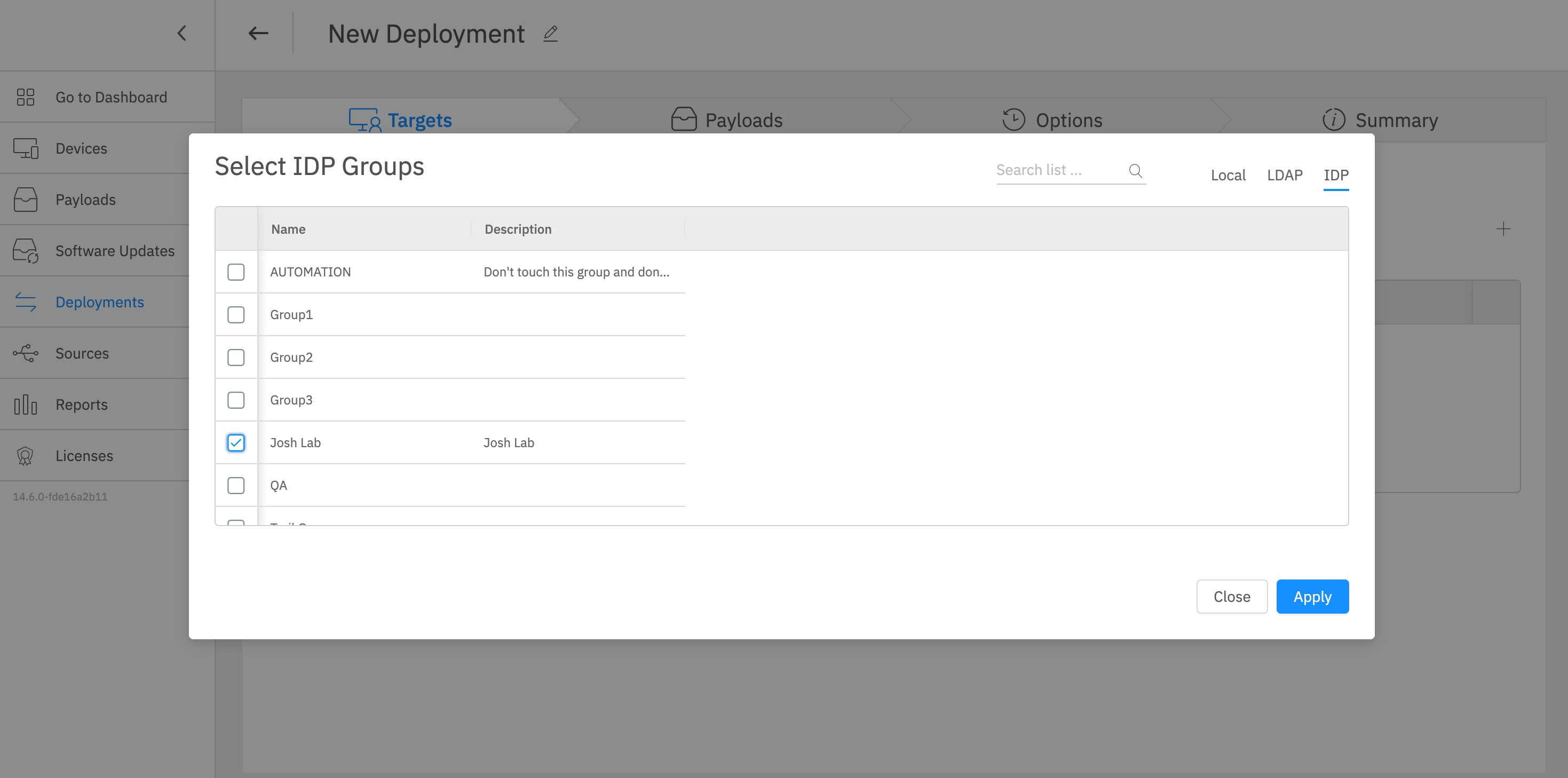
When you create or edit a Deployment in FileWave Anywhere, use the IDP selector in the upper-right area to choose groups that come from the IdP connection.
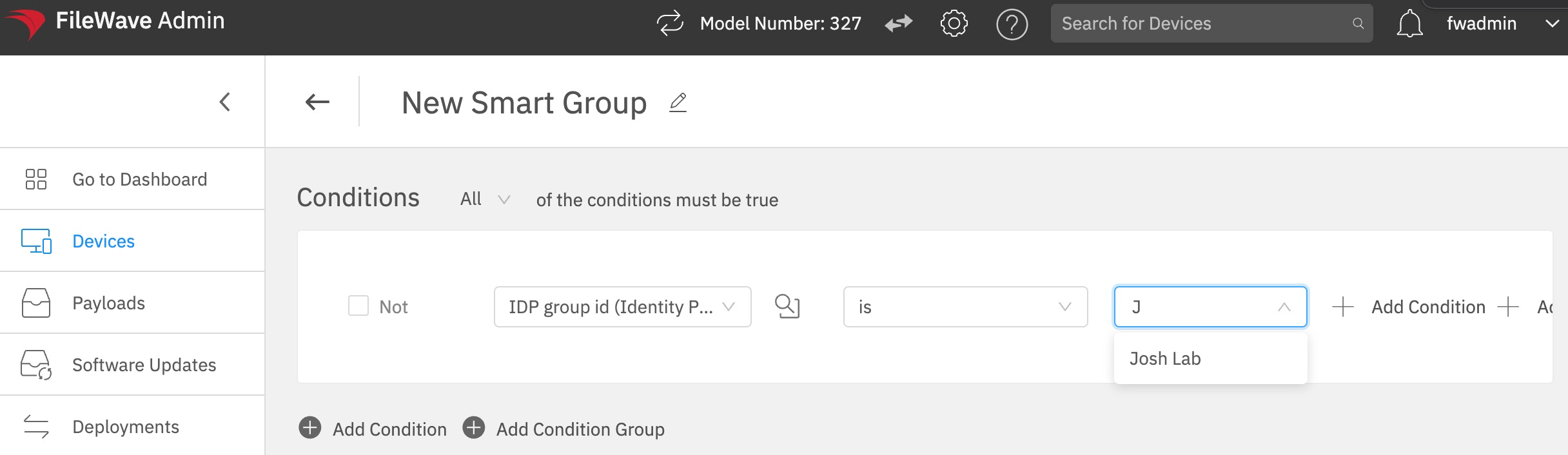
In Inventory Reports and Smart Group criteria, use the IDP group id field when you need to filter devices by IdP group membership. Start typing the group name; if FileWave knows the group, it appears below the field. In this example, Josh Lab is a group in Google.
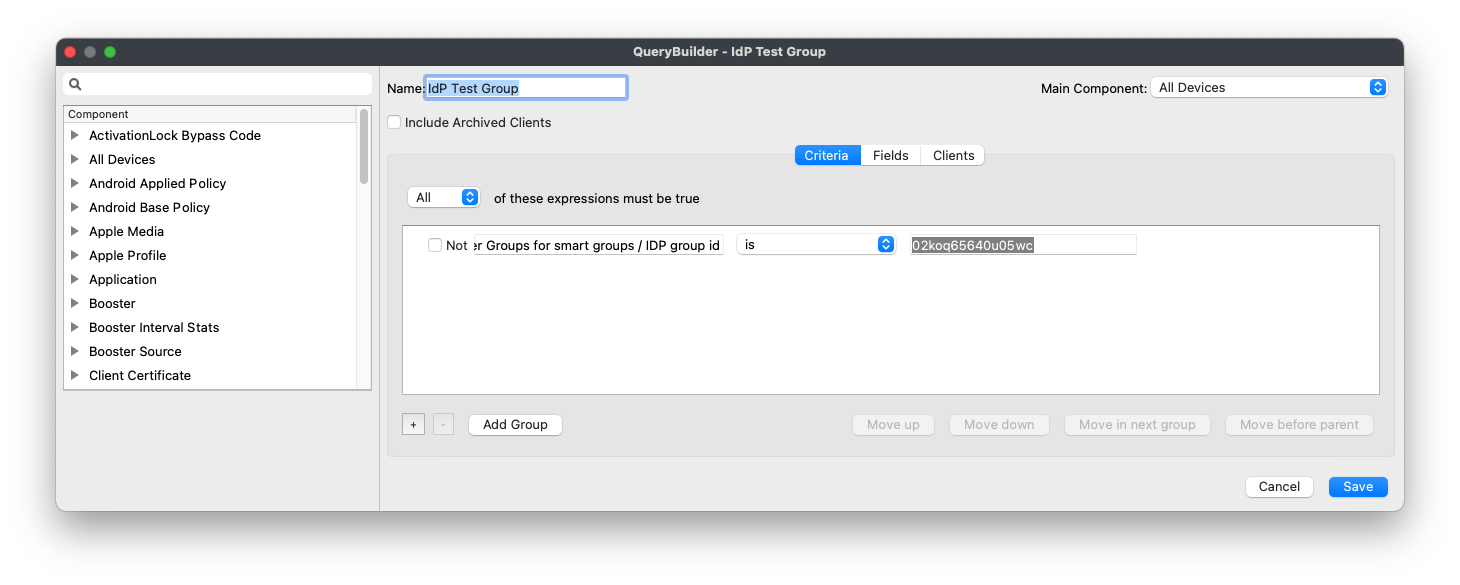
If you edit the Smart Group in FileWave Central, the saved value is the group ID, not just the display name. That matters when you troubleshoot a Smart Group that targets an IdP group or when a group name changes in the IdP.
Before assigning software to the resulting group, review its matching devices and confirm that the intended pilot device is included. If the group name is missing from the selector, check the provider connection and its directory-read permissions. If the group is available but the expected device does not match, check the saved group ID and the device's IdP group information rather than broadening the Deployment to all devices.
No comments to display
No comments to display