
Booster Installation
Description
A FileWave Booster can run on macOS, Windows, or Debian. Installers, appliances, and current install commands are on FileWave Software Downloads.
Installers
Debian
Debian has two options. FileWave provides a pre-built Debian VM, similar to the FileWave Server appliance, or you can self-install the Booster software on a Debian system.
macOS & Windows
Installers are available as PKG or MSI.
The Windows MSI can install, repair, or remove the Booster software.
Install Paths
Booster installs the software to one of the following locations:
- Windows: C:\Program Files\FileWave\fwBooster.exe
- macOS, Debian: /usr/local/sbin/fwBooster
Booster Configuration
Once installed, configuration is via the Booster Monitor application, available for both macOS and Windows from the same downloads page.
Note that the standalone application, Booster Monitor, will only be able to connect to a Booster for initial configuration. Once a Booster is configured you must access Booster Monitor from FileWave Central in the Boosters section. This is because authentication is protected, and the FileWave Central application provides a secure connection. Launching Booster Monitor directly would not have that same authentication, and you will see an error about the Booster not running.
Installation
Debian
If using the pre-built Debian Appliance, simply add the VM to the VM infrastructure. Alternatively, follow the commands provided on the downloads page.
macOS & Windows
Run the relevant PKG or MSI installer, accepting any terms and agreements.
Custom Installers may be created, pre-defining details, e.g. Server Address, Port and Booster Monitor Preferences password: Custom Installers
Configuration
Network Address
Configure a static IP for the Booster and consider adding a Domain Name within the DNS for this IP.
macOS and Windows Boosters can be configured through Settings. Debian Boosters require command-line network configuration.
Debian IP Setup
This example applies to a Debian interface managed by ifupdown through /etc/network/interfaces. If your system uses NetworkManager, systemd-networkd, or another network manager, use that manager's configuration instead. See Debian network configuration for the alternatives.
Make address changes from the local or VM console, not through the SSH connection you are changing. Confirm console access and the intended address, subnet mask, router, and DNS servers with your network administrator first; applying the change interrupts network access.
Network Interface
The current IP may be determined with the 'ip addr' command:
# ip addr
1: lo: <LOOPBACK,UP,LOWER_UP> mtu 65536 qdisc noqueue state UNKNOWN group default qlen 1000
    link/loopback 00:00:00:00:00:00 brd 00:00:00:00:00:00
    inet 127.0.0.1/8 scope host lo
       valid_lft forever preferred_lft forever
    inet6 ::1/128 scope host noprefixroute
       valid_lft forever preferred_lft forever
2: ens192: <BROADCAST,MULTICAST,UP,LOWER_UP> mtu 1500 qdisc mq state UP group default qlen 1000
    link/ether 00:0c:29:9d:4d:7e brd ff:ff:ff:ff:ff:ff
    altname enp11s0
    inet 192.168.1.98/24 brd 192.168.1.255 scope global dynamic ens192
       valid_lft 68853sec preferred_lft 68853sec
    inet6 fe80::20c:29ff:fe9d:4d7e/64 scope link
       valid_lft forever preferred_lft forever
The key part here is the name of the network interface. In the above example, this is 'ens192'.
Edit Network File
Make a backup of the current file:
sudo cp /etc/network/interfaces /etc/network/interfaces-mybackupEdit the original file:
sudo nano /etc/network/interfacesEdit the existing stanza for the intended interface rather than adding a duplicate. The example below uses ens192, address 192.168.1.22, subnet mask 255.255.255.0, and router 192.168.1.1. Replace these and the DNS addresses with your network's values. For this subnet, 192.168.1.255 is the broadcast address, not a valid default gateway. The auto ens192 line brings the interface up at boot.
# This file describes the network interfaces available on your system
# and how to activate them. For more information, see interfaces(5).

source /etc/network/interfaces.d/*

# The loopback network interface
auto lo
iface lo inet loopback

# The primary network interface
auto ens192
iface ens192 inet static
address 192.168.1.22
netmask 255.255.255.0
gateway 192.168.1.1
dns-nameservers 8.8.4.4 8.8.8.8
Save the file. From the console, bring the intended interface down and back up to apply its settings. Replace ens192 if your interface name differs:
sudo ifdown ens192 && sudo ifup ens192Re-run ip addr to confirm the new address, and use ip route to confirm the default route points to the intended router. Verify DNS resolution for the FileWave Server and confirm the Booster checks in to that Server. The dns-nameservers line requires a resolver integration such as resolvconf; do not assume that line alone updates DNS on every Debian installation.
If connectivity fails, use the console to restore /etc/network/interfaces from the backup and reapply the original interface settings before continuing.
Add a name with this IP on the DNS.
Booster Setup
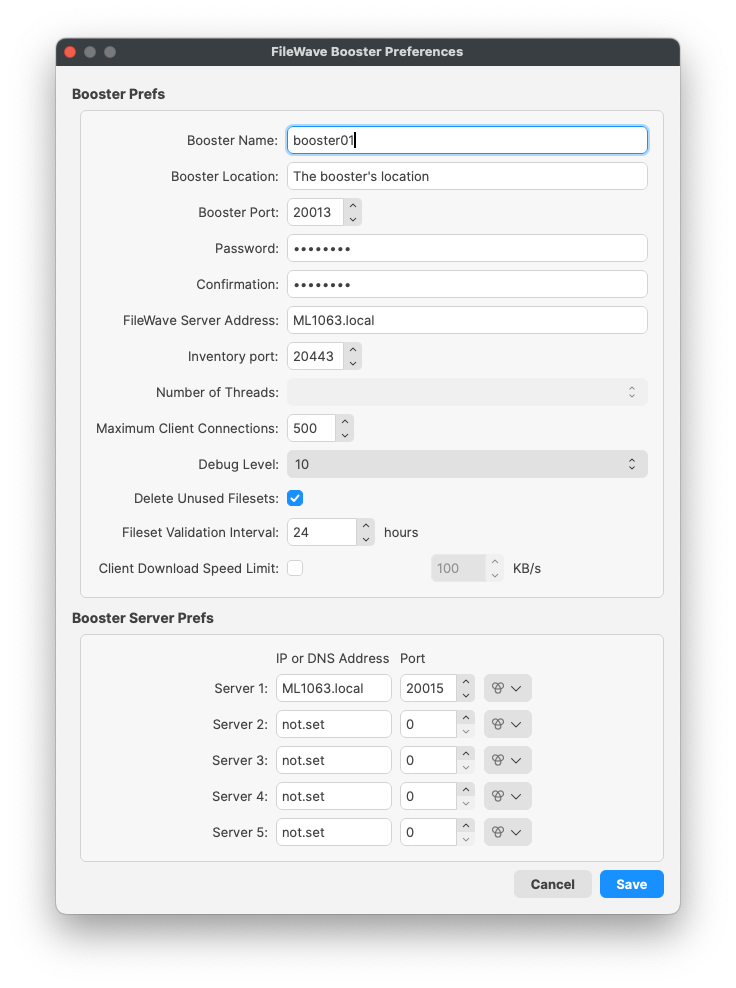
Install Booster Monitor on a macOS or Windows device. When you launch Booster Monitor, connect to the network address you created for the Booster. The initial view is similar to FileWave Client Monitor, but it shows Booster-specific details:

Select Preferences, then enter the password you created, or the default password from the Downloads page.
Change the default Booster Monitor password during setup.
This password is only used to access the Preferences from the Booster Monitor.
The Booster Monitor may then be used to configure the Booster. At a very basic level, the Server Address and port should be added.
Approving Boosters
Once a Booster is setup on the network with the relevant FileWave Server details, it should then check-in with the server and be visible in the Booster section of the FileWave Central admin application software.
Current Boosters use certificate-based approval before the FileWave Server trusts them.
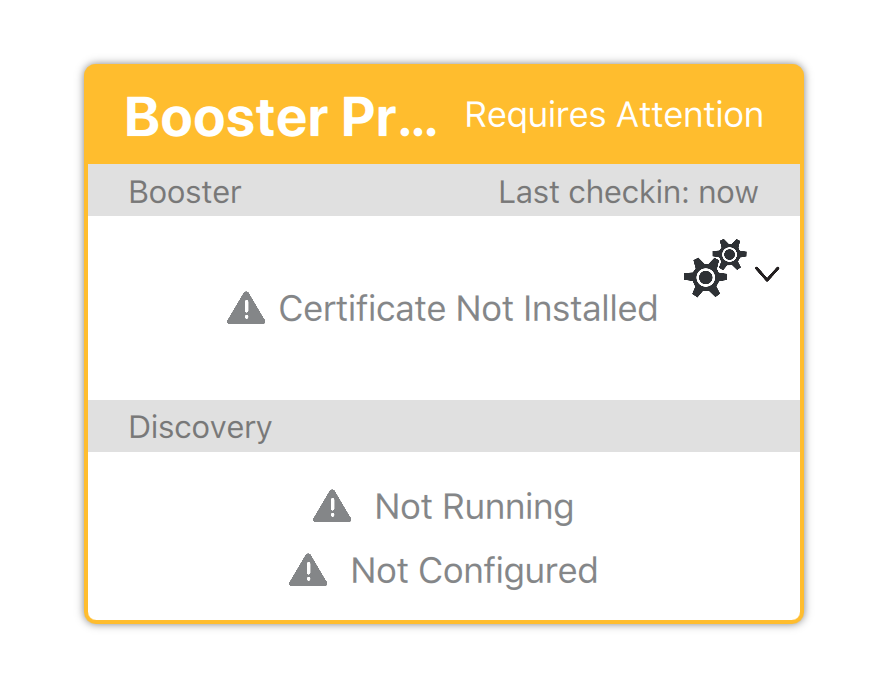
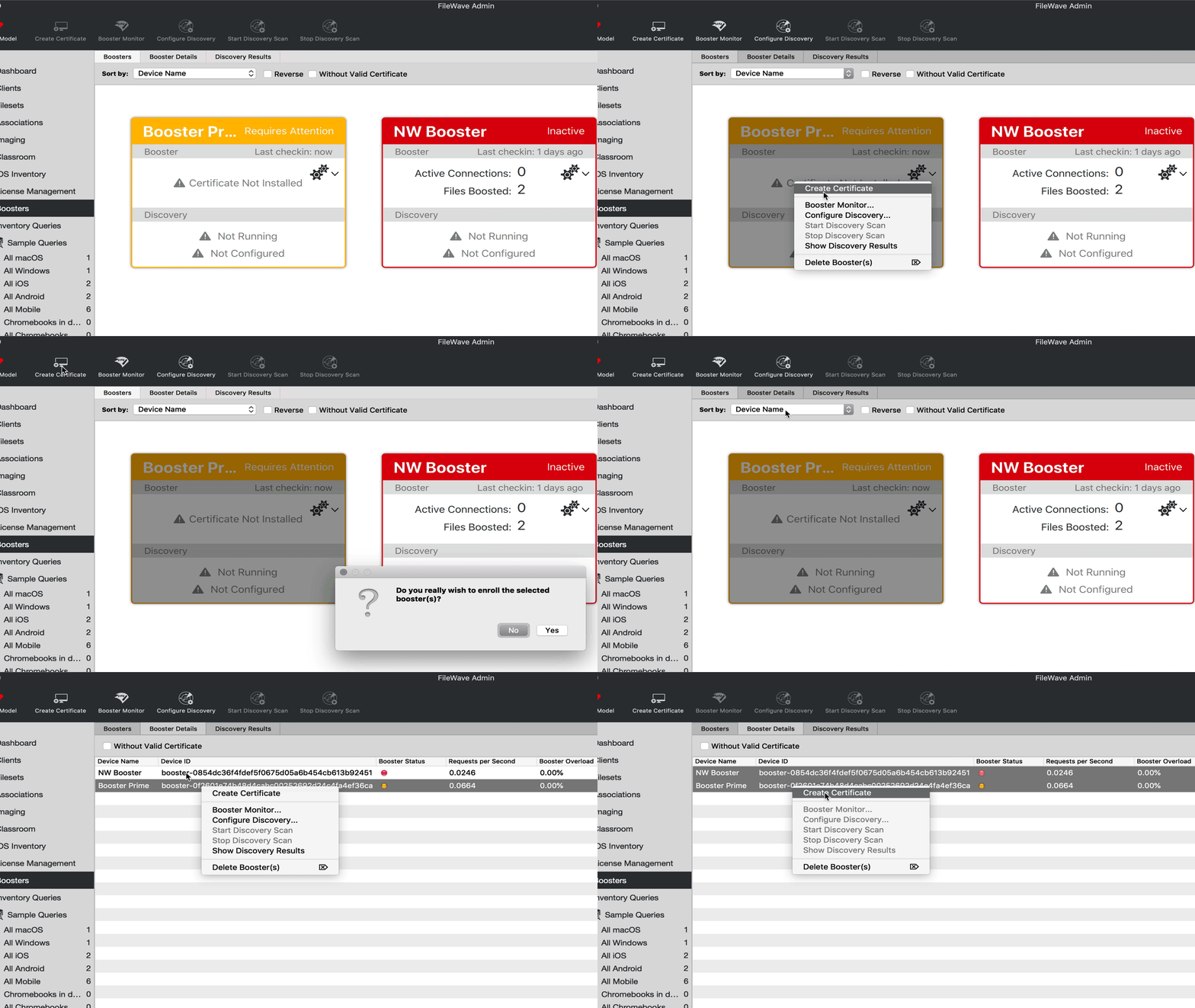
The approval process generates a certificate for the Booster. There are four ways to generate a certificate for a booster.
- Select booster(s) in the Booster view → right-click → Create Certificate/Enroll Booster
- Select booster(s) in the Booster view → Create Certificate/Enroll Booster (in the button bar)
- Select booster(s) in the Booster Details → right-click → Create Certificate/Enroll Booster
- Select booster(s) in the Booster Details → Create Certificate/Enroll Booster (in the button bar)
Booster Deletion
If you delete a Booster from FileWave, FileWave revokes its certificate. If the Booster is still running, it must be approved again after its next check-in.
No comments to display
At what version did the "Create Certificate" option change to "Enroll Booster"?
Do both options server the same purpose, and/or are there significant differences between the two?
In reply to #1
It was a change in wording only but serves same function.
No comments to display