
Configure Microsoft 365 OAuth for an Apple Exchange Profile
Configure Exchange Online with OAuth
Use the FileWave Exchange profile to configure an Exchange Online account on managed Apple devices with OAuth. Microsoft disabled Basic authentication for Exchange Online, so current Microsoft 365 deployments must use Modern Authentication.
You need:
- FileWave Central with permission to create and deploy profiles
- Microsoft Entra administrative access and the tenant ID for the Microsoft 365 organization
- User or email inventory values when the profile will populate account fields with FileWave variables
User and email variables
The Exchange profile can populate the account user and email address with %username% or %email%. Confirm those inventory values for a test user before deploying the profile. See Using variables in iOS/macOS Profiles for other supported profile variables.
How
In FileWave Central, create a profile with Filesets > Create New Desktop > Profile, then add the Exchange payload.
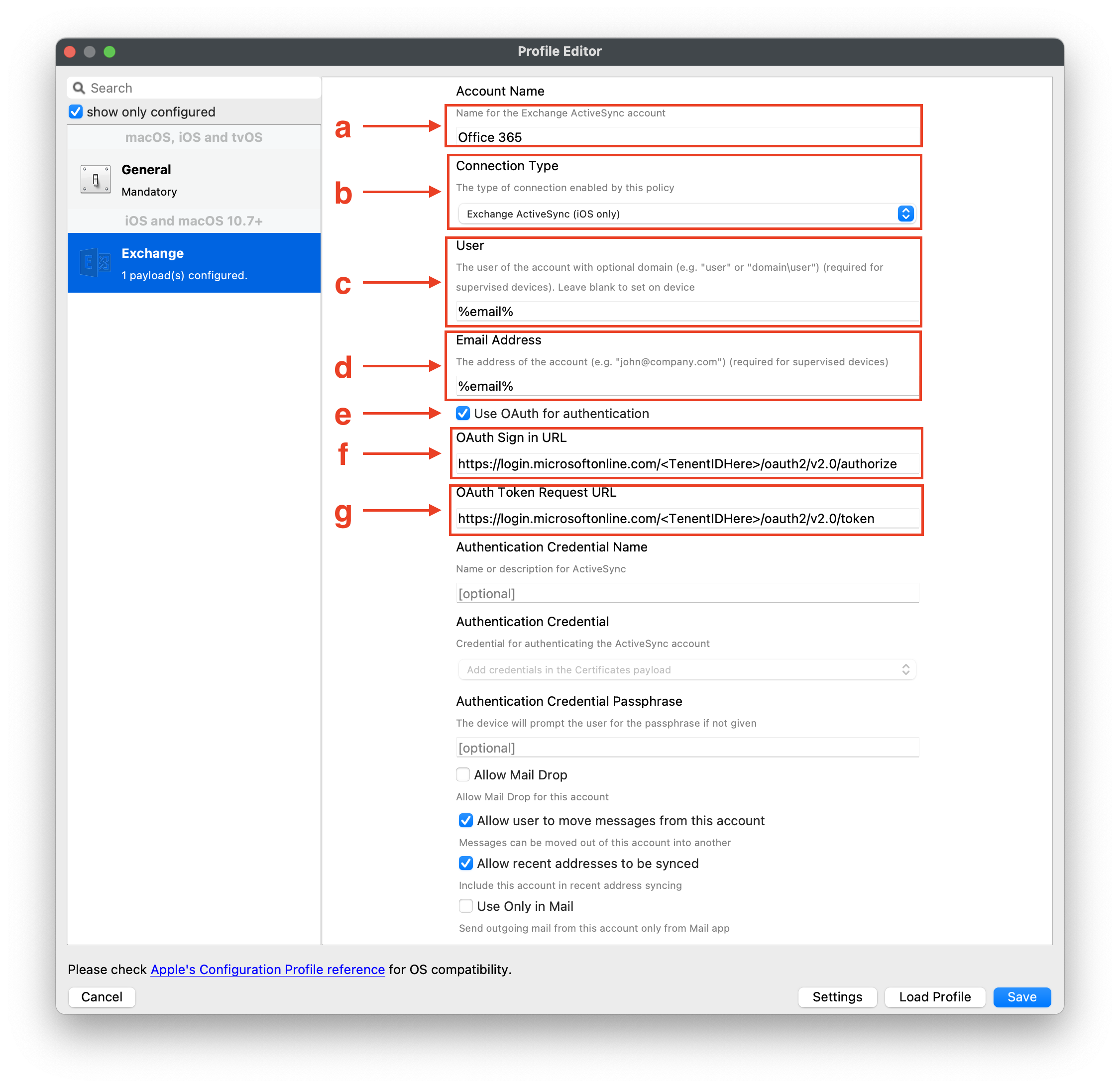
- Choose the Exchange Payload and then configure the following:
- Account Name - Name of your choice
- Connection Type - Choose iOS or macOS
- User - You may use the variable for the username or for email to populate in the user’s account; %username% or %email%
- Email Address - You may use the variable for email to populate in the email address; %email%
- Check the box ‘Use OAuth for authentication’ to enable OAuth method
- OAuth Sign in URL -
https://login.microsoftonline.com/<tenant-id>/oauth2/v2.0/authorize - OAuth Token Request URL -
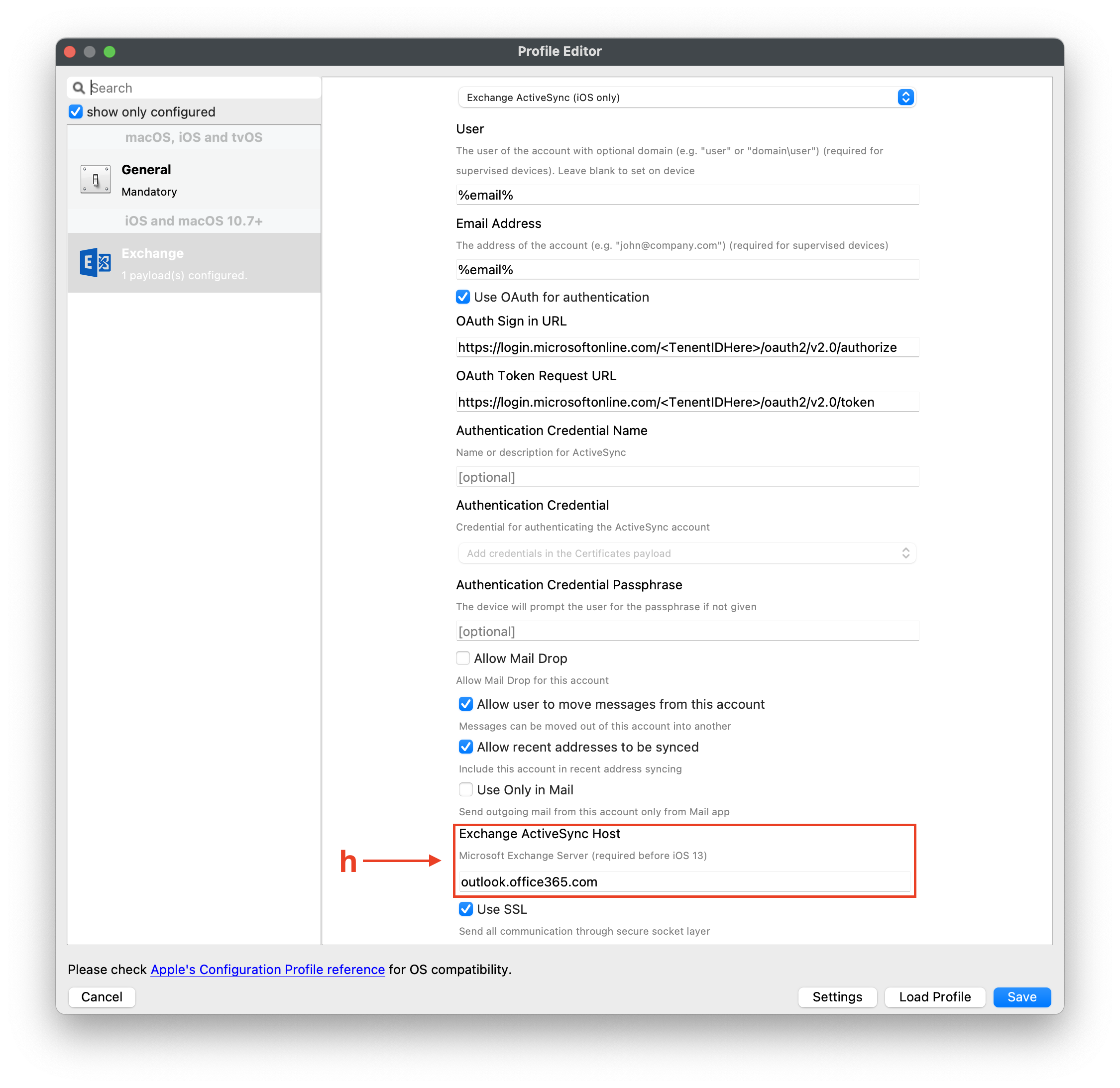
https://login.microsoftonline.com/<tenant-id>/oauth2/v2.0/token - Exchange ActiveSync Host -
outlook.office365.com - Optional settings - you may check based on your desired settings for the mail account
The screenshots show the Exchange payload fields and the correct /oauth2/v2.0/authorize and /oauth2/v2.0/token paths.
Related Content
- Deprecation of Basic authentication in Exchange Online | Microsoft Learn
- Be sure to review Microsoft Office documentation on setting up Exchange Online | Microsoft Learn
No comments to display
No comments to display