
Managing Web Clips on iOS / iPadOS
Description
Web Clips can be managed alongside apps in supervised iOS and iPadOS deployments. This article explains how to create a Web Clip, place it with a Home Screen Layout payload, and account for it in app restrictions.
Ingredients
- iOS 11.3+
- Supervised devices
- Web Clip(s)
Directions
Creating a Web Clip
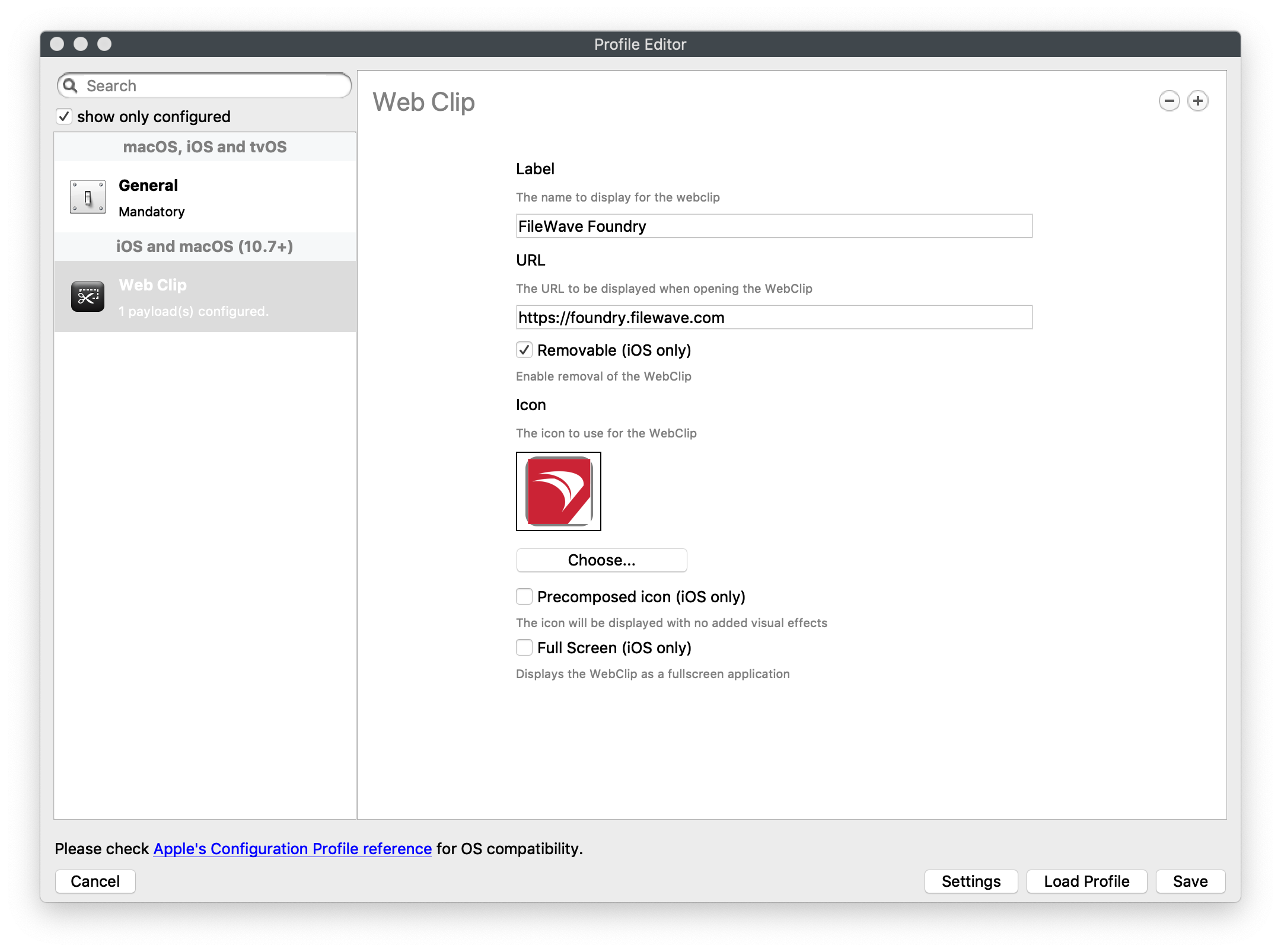
Web Clip payload can be found in the FileWave Profile Editor and may be created by:
- Naming the Profile
- Label the Web Clip (name displayed on the device)
- Add the URL
- Add an icon. An icon is not a requirement, but will make it easier for users of devices to identify the Web Clip.
URL scheme
Enter the complete destination URL, including its scheme, such as https:// or http://.
Creating a Home Screen Layout
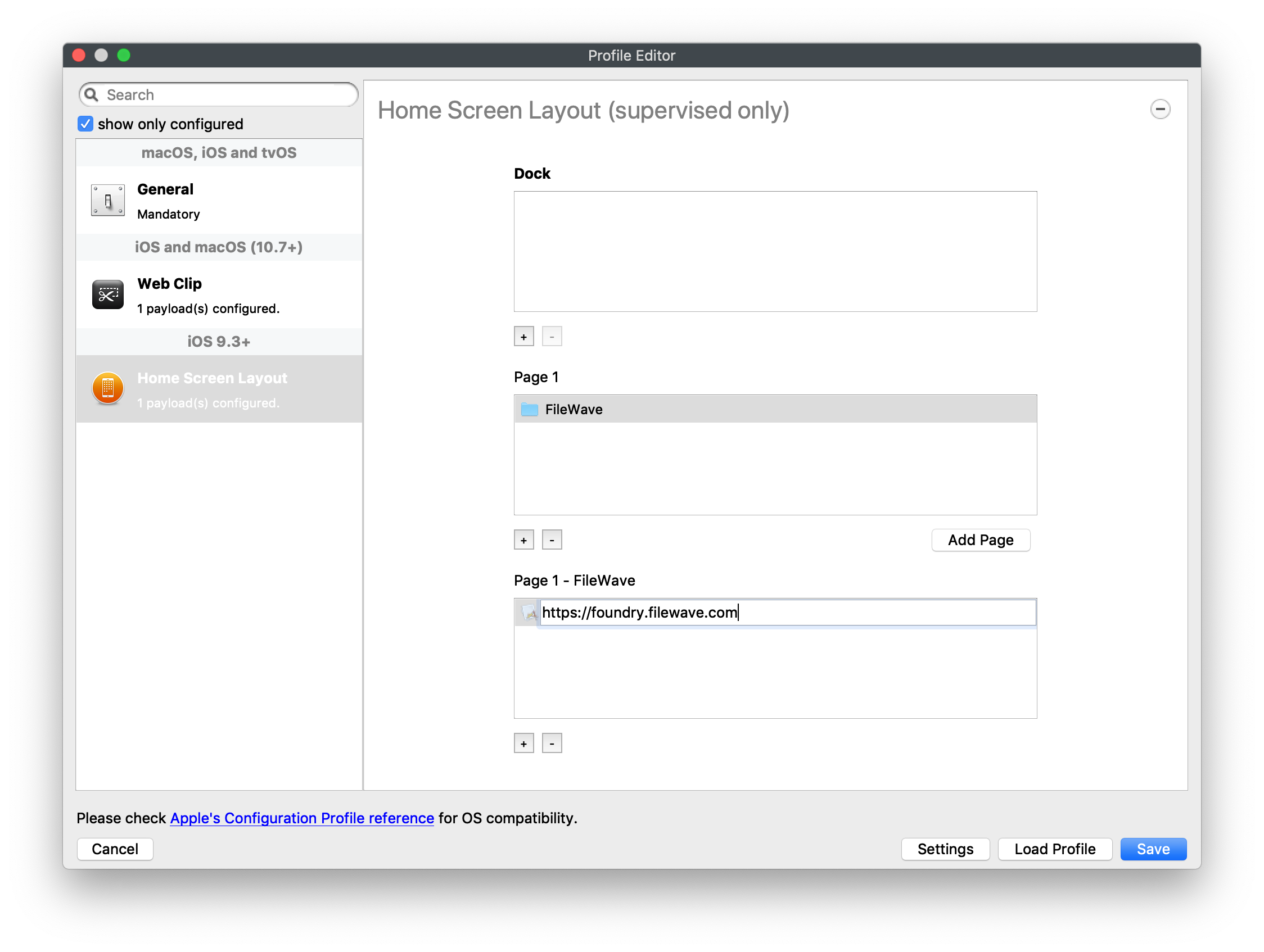
Home Screen Layout payload can also be found in the FileWave Profile Editor.
Home Screen Layout normally identifies apps by bundle ID, but every Web Clip uses the same bundle ID. To place a specific Web Clip, copy its complete URL into the Home Screen Layout payload exactly as entered in the Web Clip payload, including the scheme.
For environments that still use the legacy App Portal Web Clip, see Moving the App Portal Web Clip using the Home Screen Layout Payload.
App Restrictions
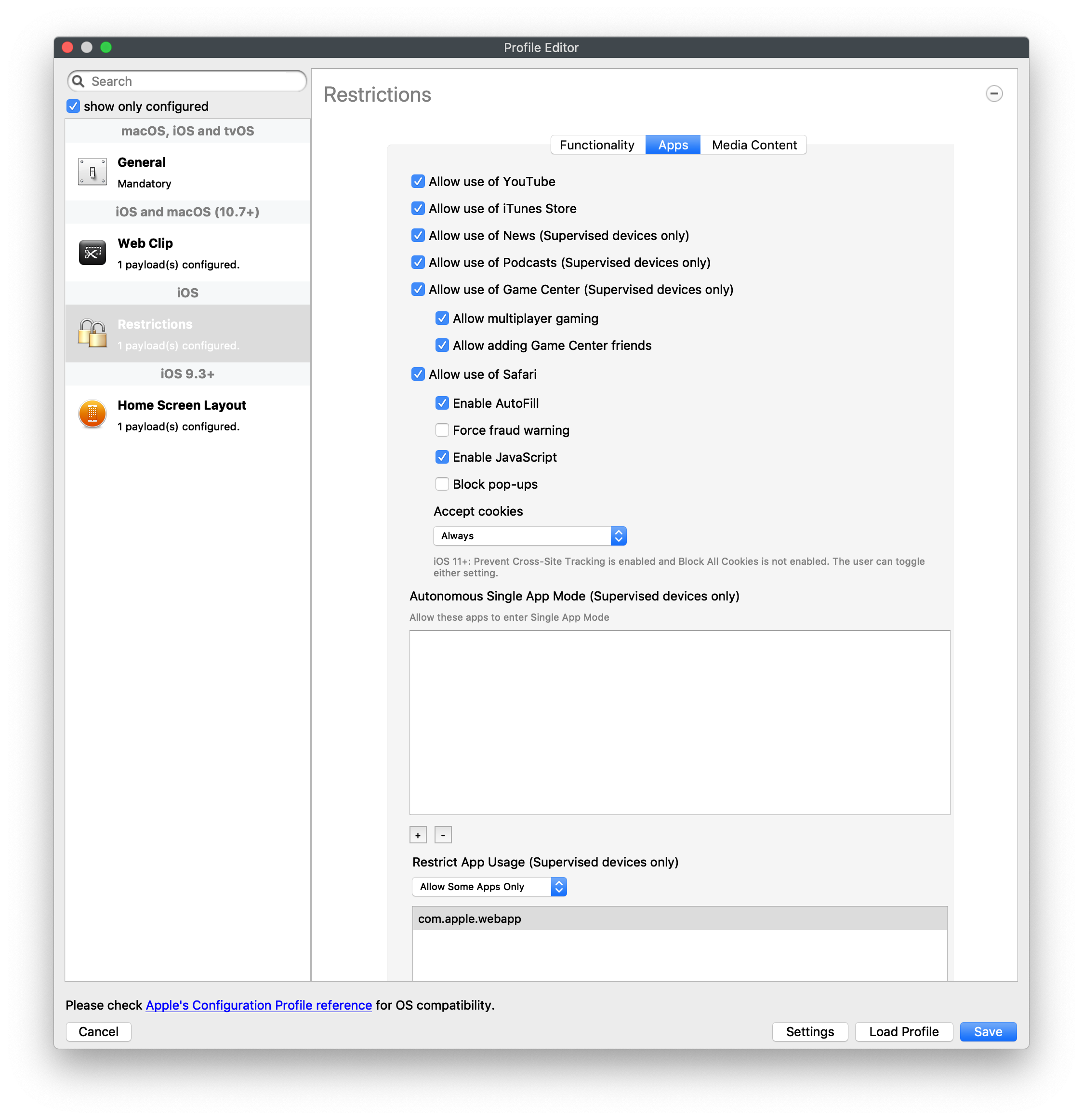
When Application Restrictions are applied, allow Web Clips where required by referencing the bundle ID com.apple.webapp.
Bundle ID
Because every Web Clip uses the same bundle ID, an app restriction allows or denies Web Clips as a group. Use separate profile scope and Deployments when different device groups need different Web Clip access.
User-created Web Clips
If app restrictions disable Allow Removing Apps, users can still create Web Clips but cannot remove them afterward.
No comments to display
No comments to display