
Fileset Properties
Properties exist for most Filesets, but options displayed will vary depending upon Fileset type.
File-level Filesets have the following properties:
|
Properties |
Additional features include Reboot, the Force sub-option, priority, and an option to change verification for the entire Fileset. Priority provides extra control over the order of Fileset activation. |
|
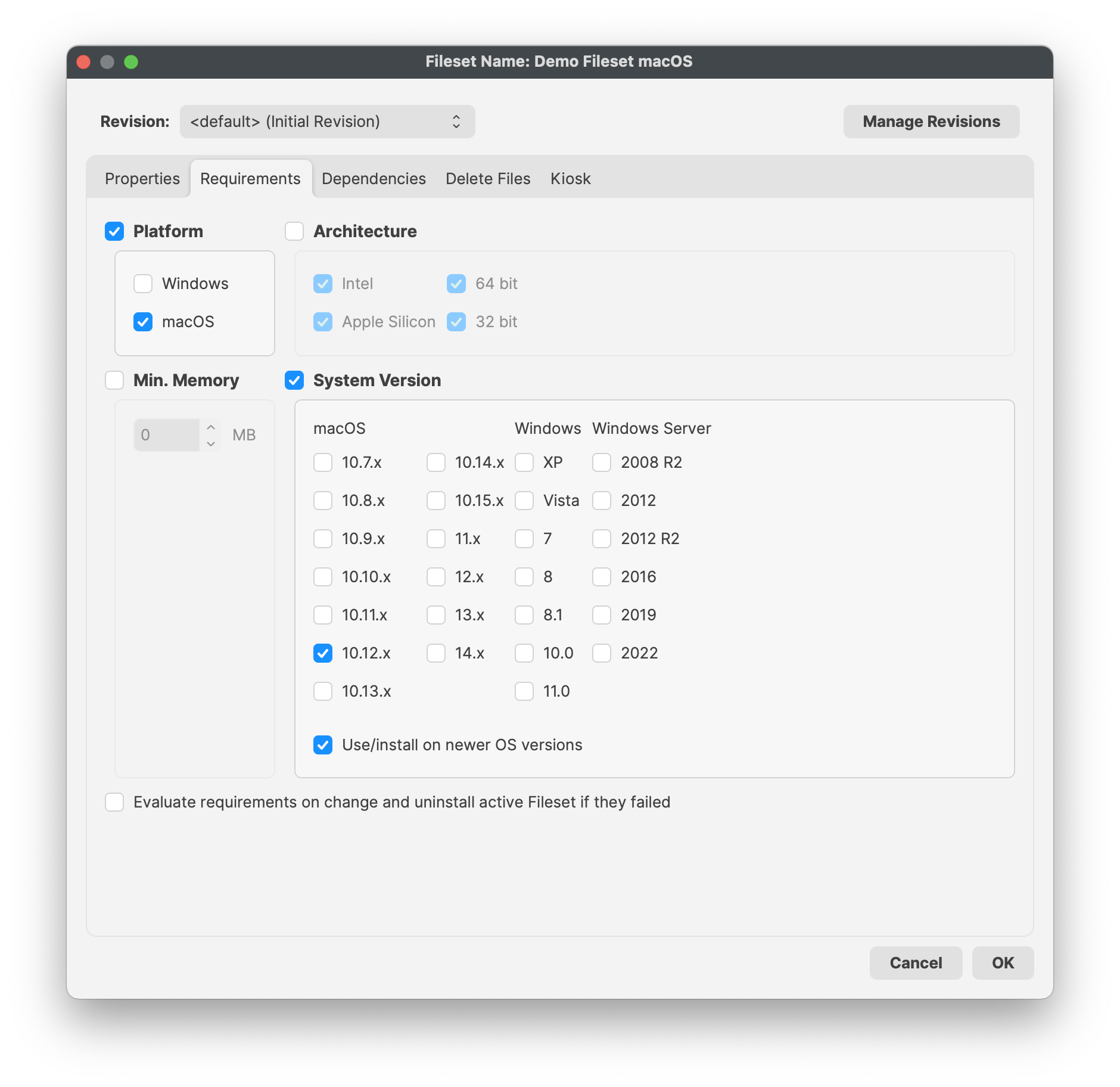
Requirements |
Settings define the OS and hardware requirements for the Fileset. The Fileset downloads and activates only on devices that match these requirements. |
|
Dependencies |
Dependencies are covered in more detail elsewhere. In essence, the Fileset activates only after another defined Fileset installs first. |
|
Delete Files |
A defined list of files to be removed during activation |
|
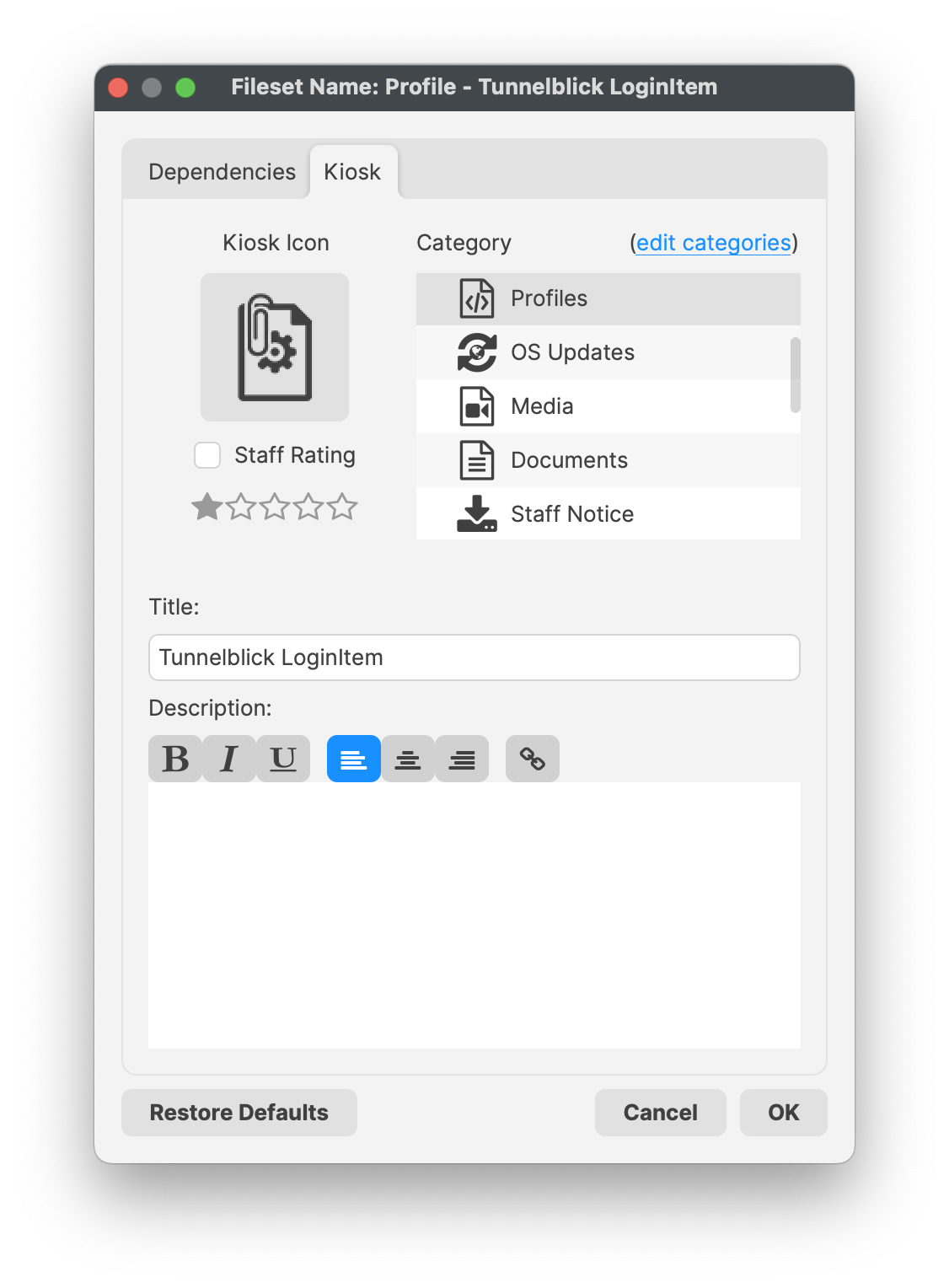
Kiosk |
Details shown to users via the Kiosk Self-Service menu and system tray item. |
Windows files in use (FileWave Client 17.0): during the first activation of a file-level Fileset, the Client can move an in-use file aside with a _deleted suffix and install its replacement in the same activation. In-use files listed under Delete the paths below upon Fileset activation can also be moved aside; the renamed file is scheduled for deletion at the next Windows restart. A running process can still use the old copy. Review the Delete Files and restart checks before deployment. This is not native MSI package verification or an assurance of restart-free installation.
Example, File Level Requirements:
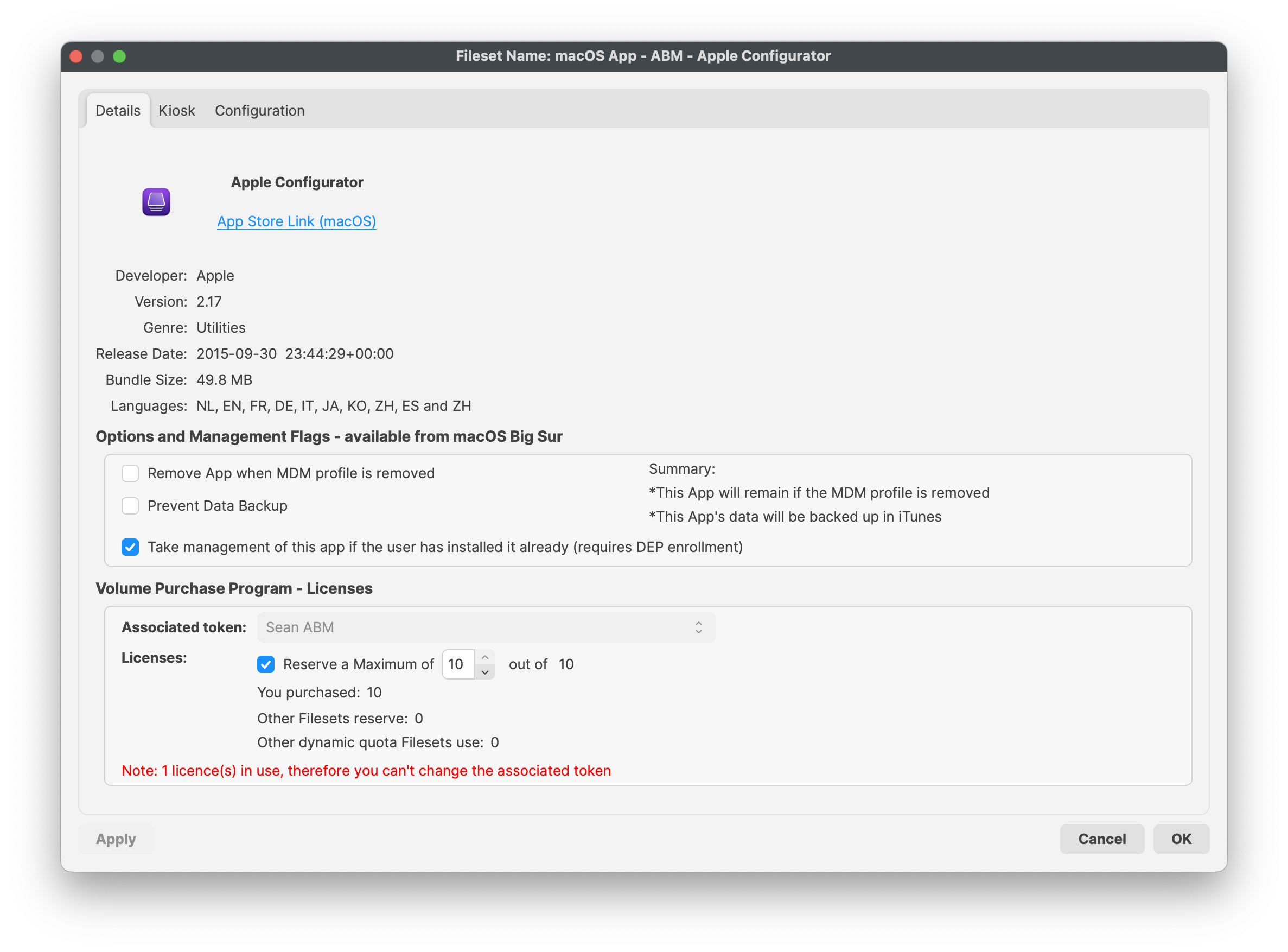
Example, Apple App Store Details:
Example, Apple Profile Kiosk:
Profiles may only be a dependency in one direction, to prevent unexpected delay of Fileset installations.
FileWave has no control over the MDM protocol and relies on Apple’s process for delivering MDM items. For this reason, dependencies can make an MDM Fileset, such as a profile or VPP app, install after a non-MDM Fileset has activated, but other Filesets cannot depend on an MDM Fileset.
Linux Package options (FileWave 17.0+)
Catalog Linux Package Filesets have two package-management options:
- Upgrade automatically at verify: enables installation of available package upgrades during verification.
- Uninstall when made passive: enables package removal when the Fileset becomes passive. If disabled, the package remains installed when made passive; this does not guarantee retention of FileWave-managed APT source and keyring files.
Review these options in Central before deployment. Anywhere 17.0 also displays and saves them for an existing Linux Package Fileset under Fileset Settings. Choose the values deliberately and reopen the saved settings to confirm them; do not infer defaults from an example screenshot. Use Central to create the Fileset from the catalog.
These controls apply to the catalog APT workflow, not an uploaded native DEB installer. For native DEB verification and Use uninstaller, see Deploy Linux Software with FileWave. Neither the installer verification setting nor the catalog upgrade option is a general repair guarantee for application files.
No comments to display
No comments to display