
Resolving Conflicts in Associations Conversion
What
When you convert legacy Associations to Deployments in FileWave Anywhere, the selected assignments may use different installation types, timing options, or Fileset revisions. Use this article to resolve those differences and check whether combining the targets would send additional content to devices. If the differences are intentional, keep separate assignments rather than forcing them into one Deployment.
When/Why
Use the conflict resolution tool to resolve conversion conflicts and preview the impact before saving. That preview is the safety check: it shows whether the conversion will make the changes you intend. The most likely conflicts are:
- changing from Kiosk to Standard deployment (or vice versa)
- having more than one target (not technically a conflict, but important to understand)
- differences in timing options
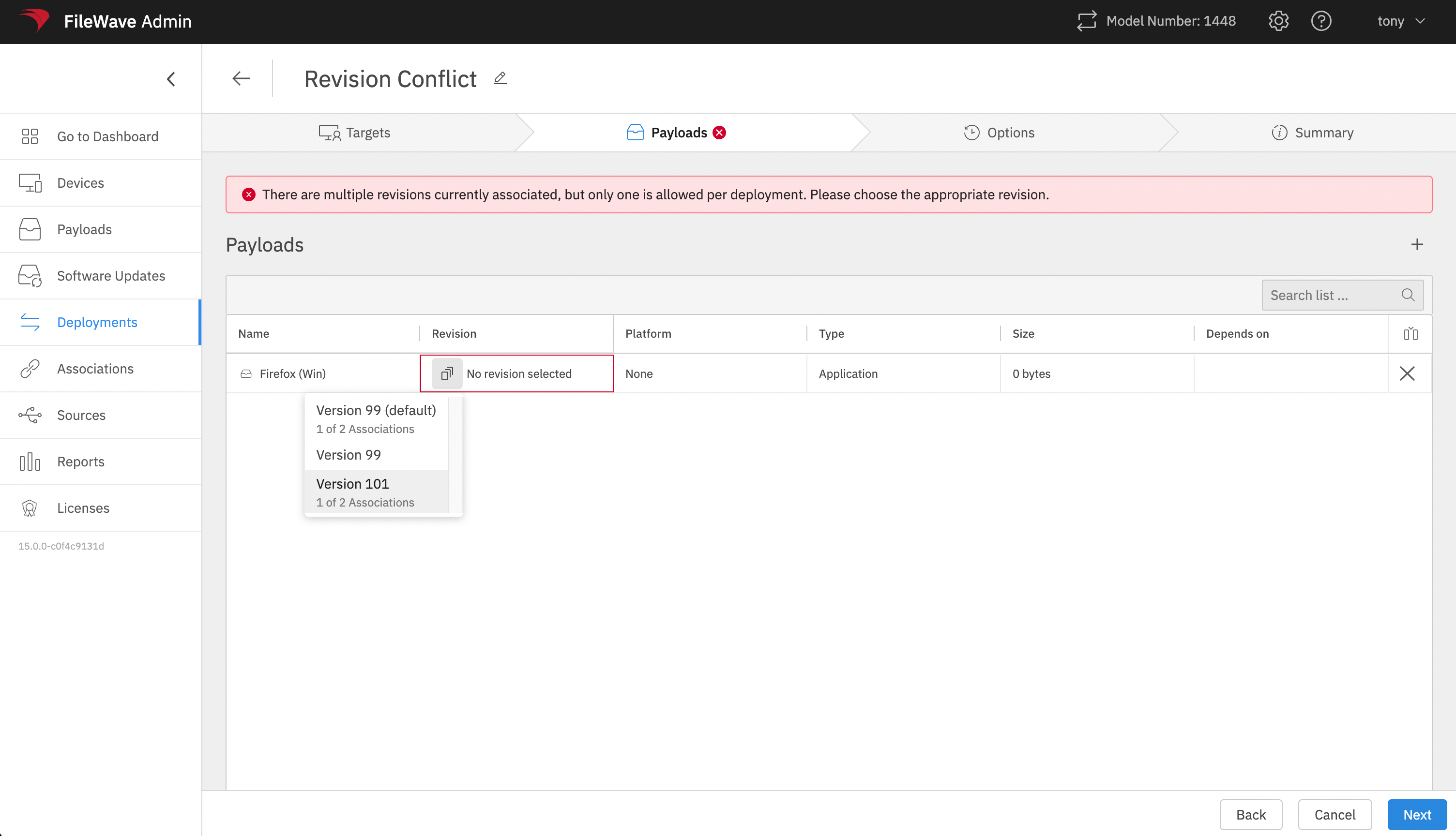
- differing payload revisions
How
The examples below show common conflict types and the preview output to check before publishing the conversion. The screenshots retain the original FileWave 15.0 web interface, including its older native-app read-only notice. Current FileWave Central supports Deployment editing; see Deployment options and when to combine assignments for the current workflow.
| Conflict Type | |
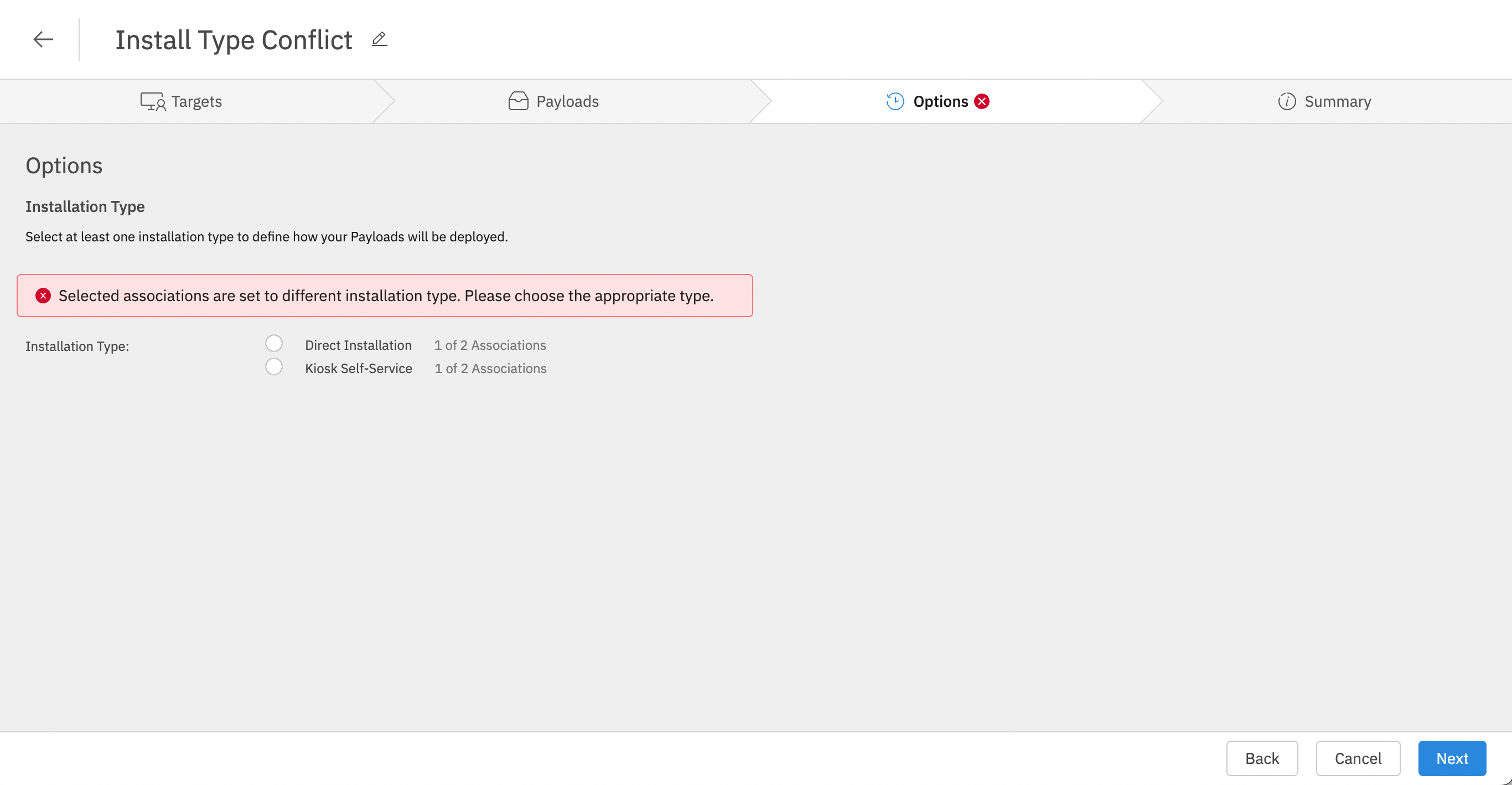
| Conflicting Installation Type |
Note that you have to choose which installation type you want to have before you can preview |
|
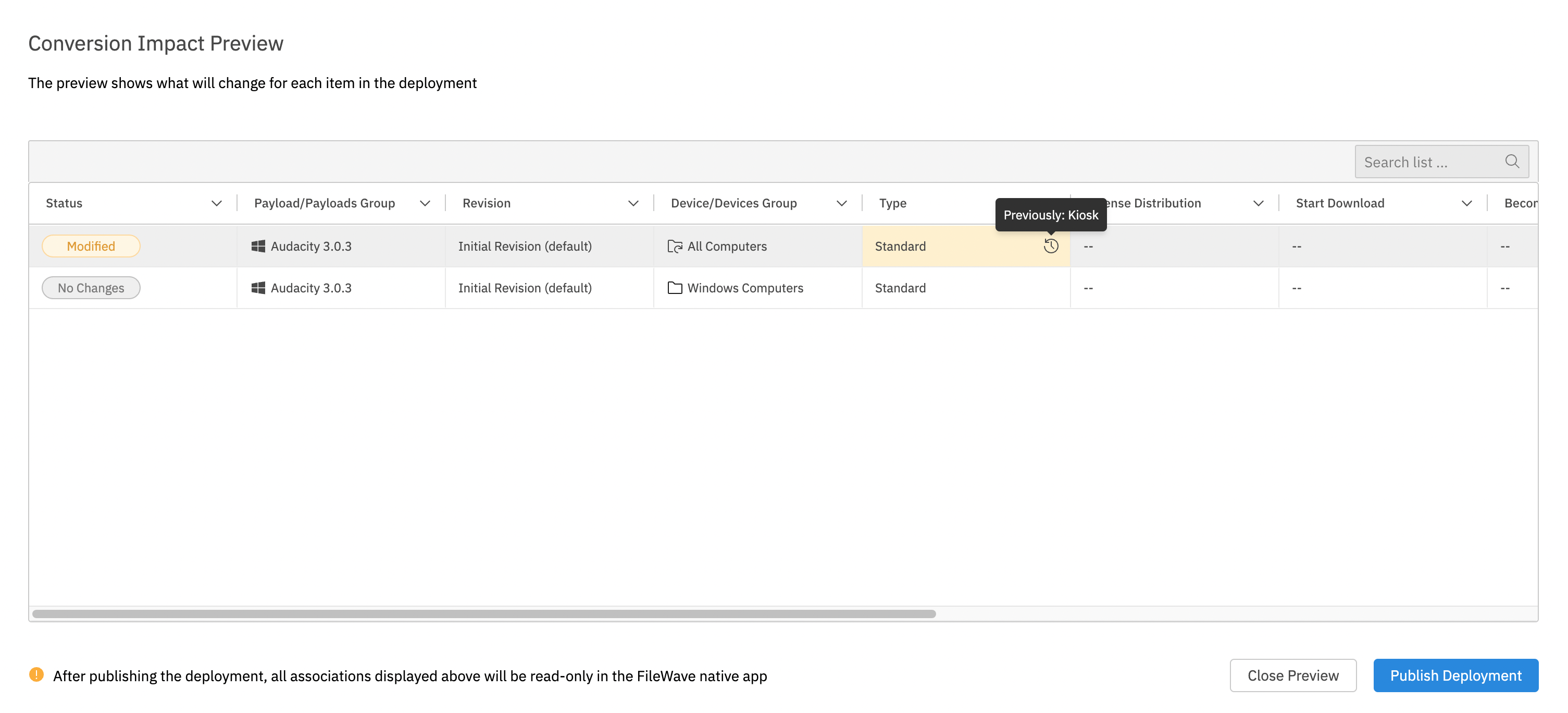
And the preview shows you which association changed, and how it changed |
|
| Mixing targets and/or payloads |
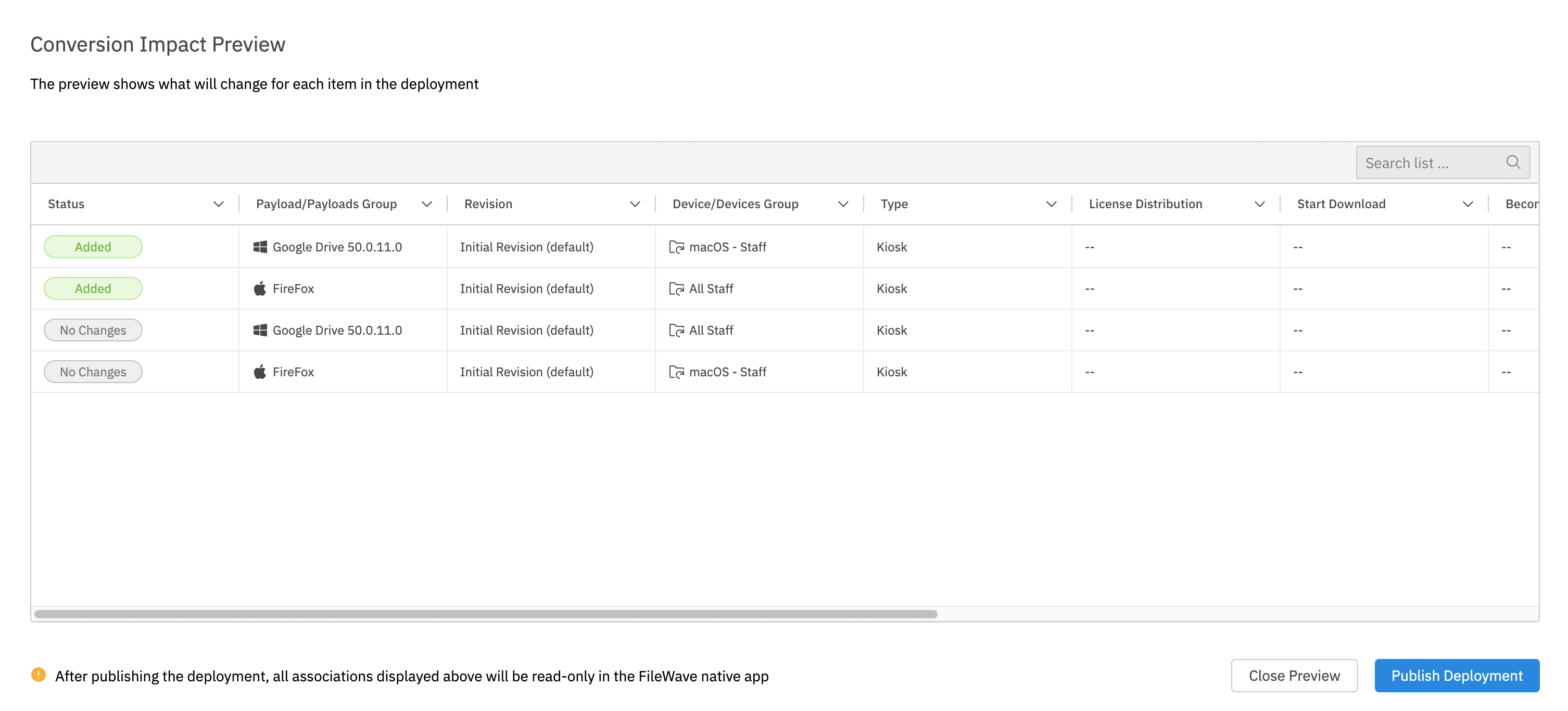
Combining targets with different payloads does not trigger a conflict, but it expands which content each target is assigned. For example, combining IT/Firefox with HR/Chrome assigns both Firefox and Chrome to the devices in both selected groups, subject to platform compatibility and the chosen installation type. If IT should receive only Firefox and HR only Chrome, keep separate Deployments instead.
Notice though that in preview, we see the “added” payloads to the corresponding groups. |
| Differences in Timing |
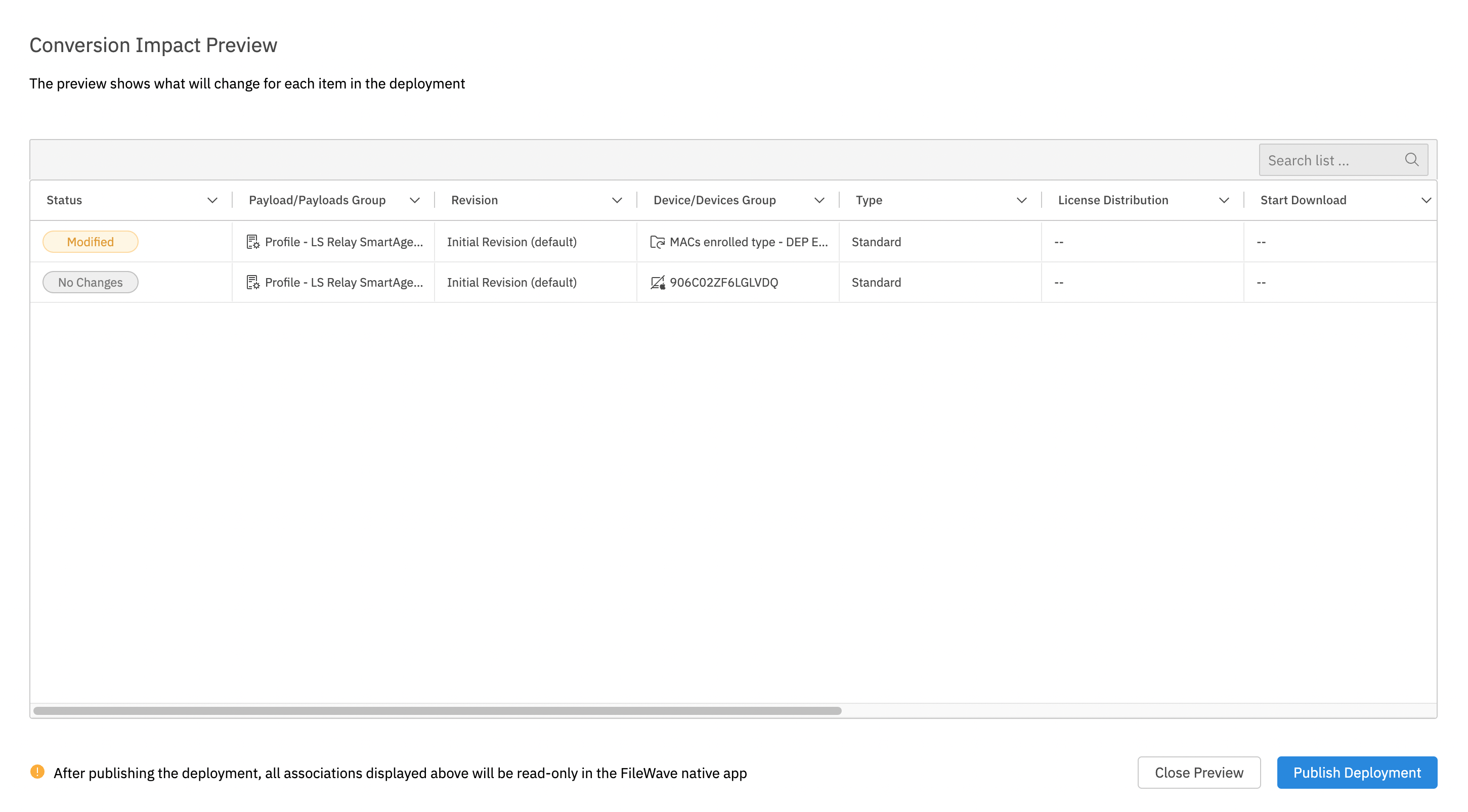
Note that timing option changes will show in preview too. |
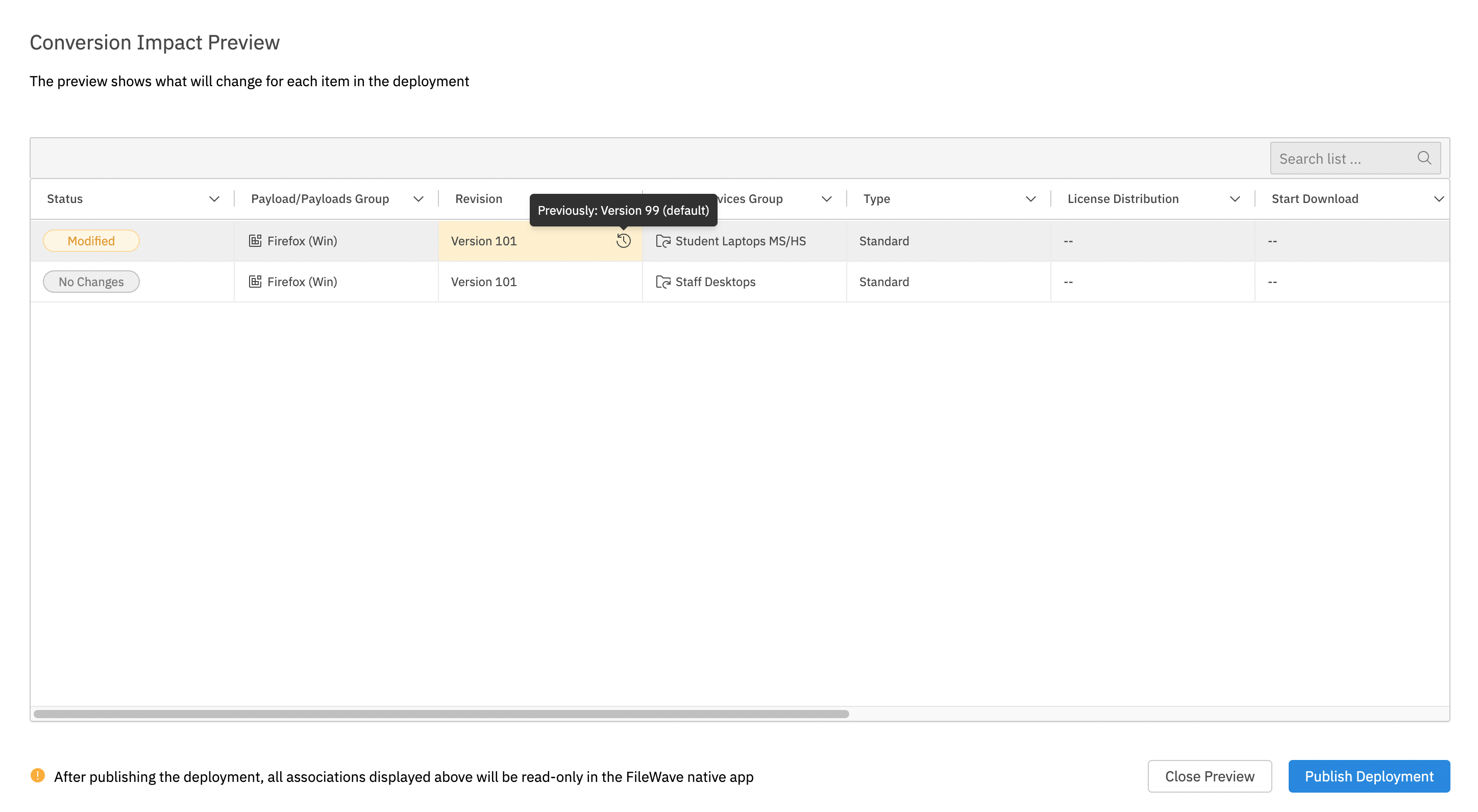
| Differing Payload (Fileset) Revisions |
In preview then, you will see the changed revision. |

Digging Deeper
Important note: If there are timing options in the past with regard to file deletion, those “associations” will automatically become exclusions in the new deployment. You’ll see exclusions identified as an icon with a slash through it.
Some additional notes regarding the preview view:
- Large conversions can show many records in the preview. Scroll through the list before publishing.
- No changes are made until you publish from the preview page (Publish Deployment in the screenshots). Publishing replaces the selected Associations with the resulting Deployment; it does not keep a second independent copy of those assignments
- You can cancel before publishing without changing the selected Associations. Close Preview returns from the preview without publishing. After a pilot conversion, verify the resulting targets, Fileset revisions, timing, and device behavior before converting the next batch.
- There can be 4 types of changes:
- No change at all
- Modification of one element (i.e. timing)
- Addition of an element (i.e. a payload is going to something it wasn’t going to before)
- Deletion of an element (i.e. a payload is no longer going to something that it did prior)
No comments to display
No comments to display