
MSI & PKG Payloads
What
FileWave Anywhere can create computer Payloads for MSI installers on Windows and PKG installers on macOS. Use this for straightforward installer uploads when you do not need the full FileWave Central Fileset workflow.
Quick answer: In FileWave Anywhere, open Payloads, create a new Payload, add the MSI or PKG file, and let the upload finish. The upload can continue while you leave the page or start another upload.
When/Why
MSI and PKG installers are the normal package formats for Windows and macOS software deployment. FileWave Anywhere lets you upload those installer files directly from the web console, which is useful for simple app Payloads and remote admin work.
How
In the Payloads view, click the  icon, name the new Payload, and choose one of the Add File options. The example below creates a Payload for the FileWave Central installer for Windows.
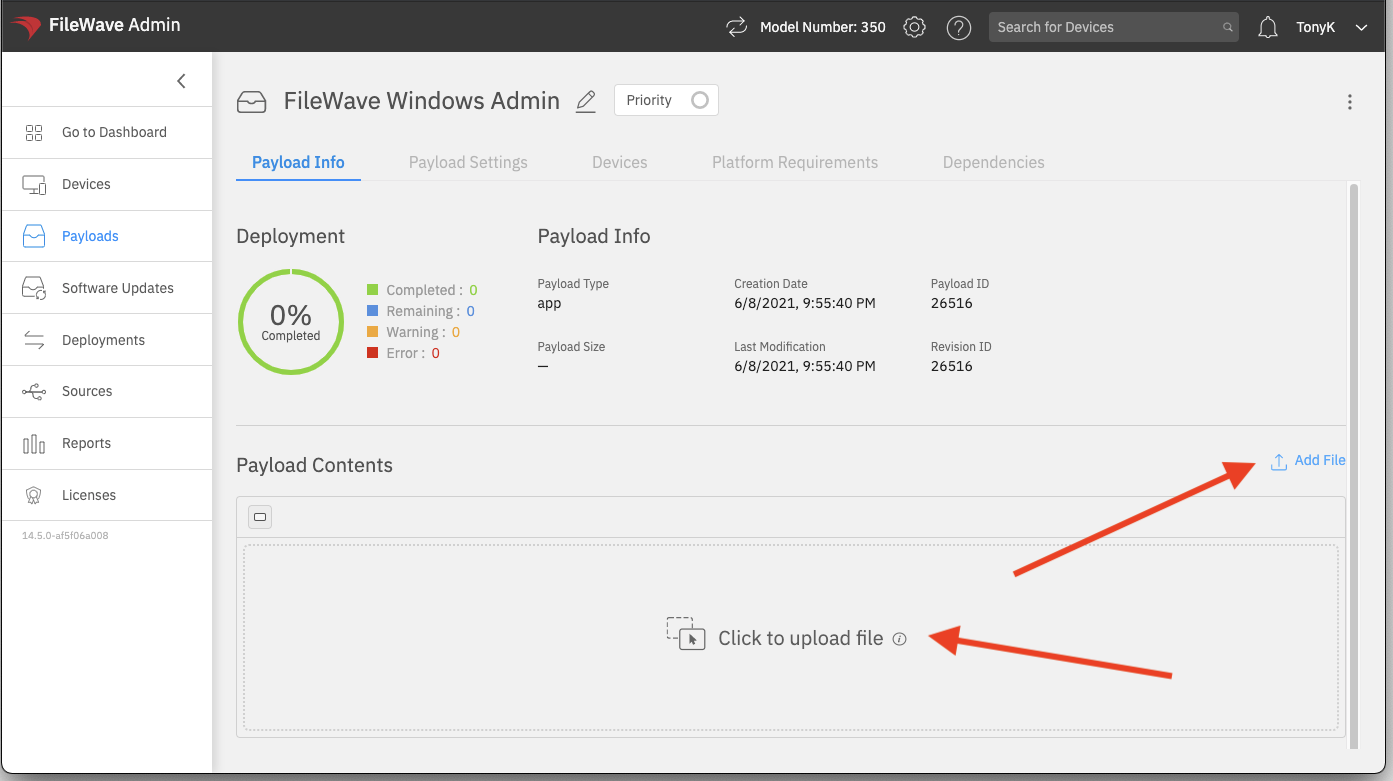
After you select the file, the upload starts immediately:
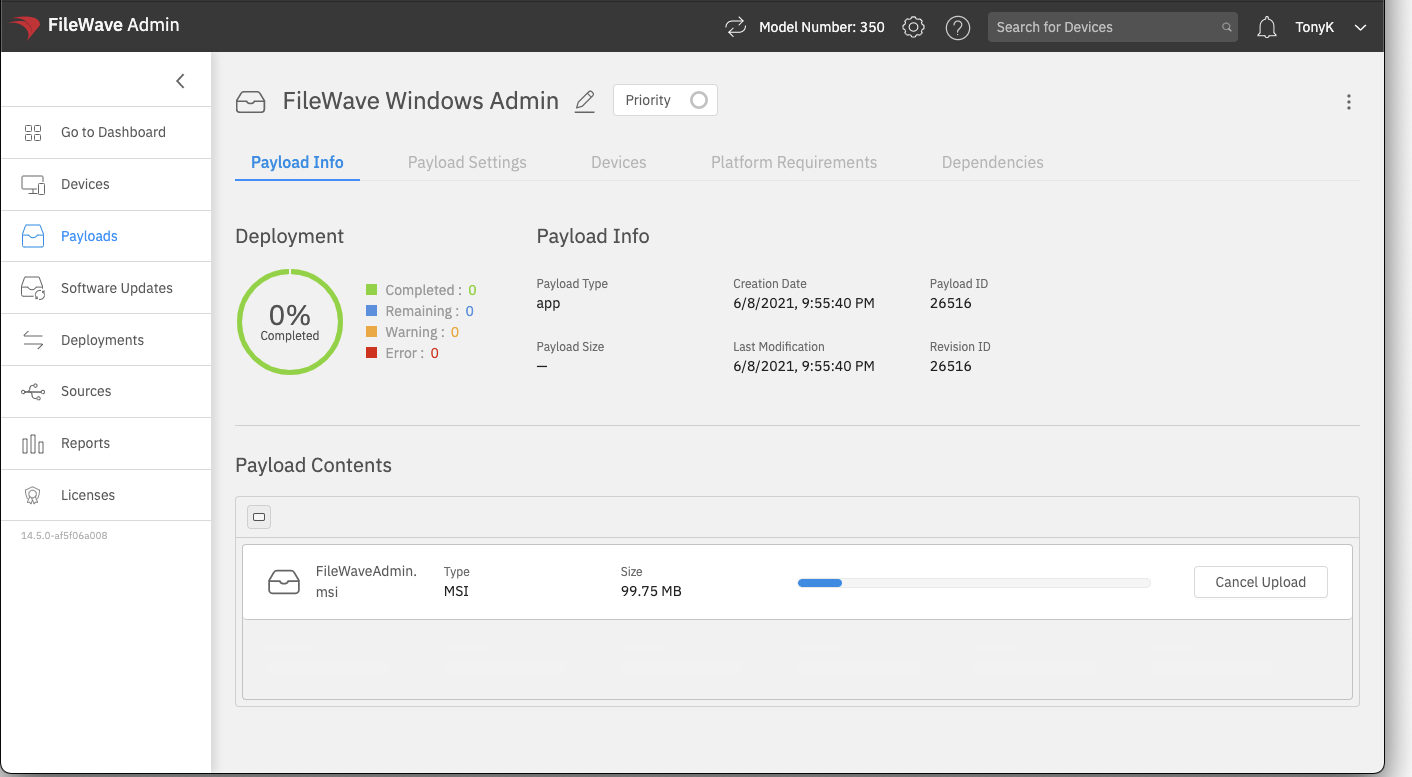
Uploads created this way have two practical advantages:
- The upload can recover from a temporary network interruption.
- You do not need to stay on the upload screen. You can move to another area of FileWave Anywhere or start another Payload upload while the first one continues.
After the Payload uploads, you can make simple changes such as removing or replacing a file and setting installer properties:
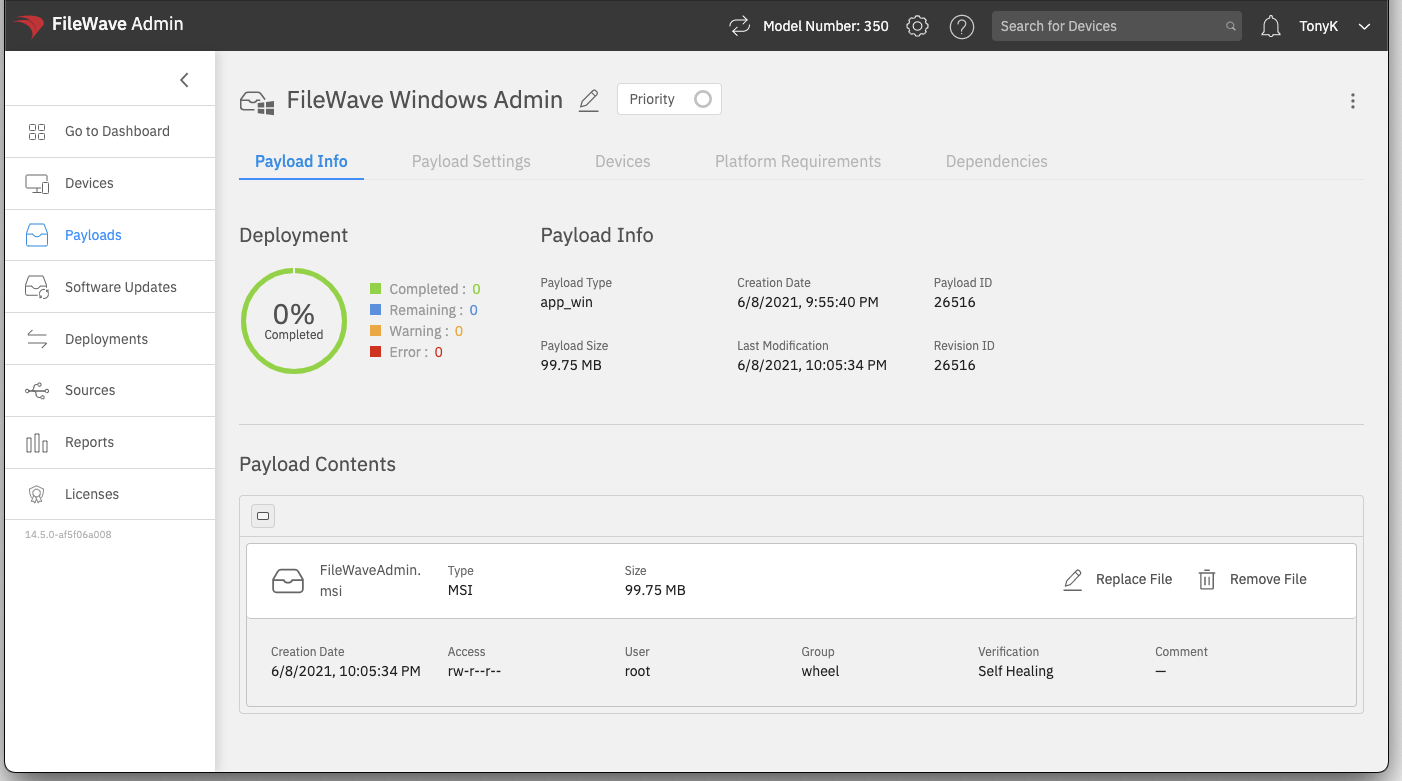
For Payloads that need scripts, revisions, or more advanced file-level control, use FileWave Central. FileWave Anywhere is best for direct MSI and PKG installer Payloads.
Need revisions for MSI or PKG installers? Use FileWave Central and follow Desktop PKG and MSI Filesets. For a PKG or MSI Fileset that only contains the installer, drag the new installer onto the existing Fileset and choose to add a revision. If you duplicate a revision because the Fileset also contains other files or scripts, keep the replacement installer filename the same as the original when you manually replace it.
Edits made to Payloads in FileWave Anywhere take effect immediately. There is no separate Save button for these modifications, so review the Payload before assigning it to devices.
No comments to display
I have found that using revisions with these types of filesets can get a little iffy. Some documentation on the proper process to create a revision of a fileset that's using MSI/PKG payloads would be helpful. The main thing seems to be making sure that the .msi/.pkg file that's replacing the one from the old revision has the exact same name as the one being replaced. Otherwise whatever mechanism that automates the msiexec/installer process seems to get confused.
For PKG/MSI Fileset types, if you manually replace the file that is there, then you would need to replace the PKG/MSI like for like (name matches). If the Fileset only contains the installer, there is no need to duplicate and then edit manually. Just drag the PKG/MSI onto the Fileset and it should prompt, 'do you want to create a new revision'. In this instance, you can just choose to create a new revision and within this new revision the installer could be called anything.
However, if the Fileset has had other items added to the Fileset then it would be easy to duplicate the revision, such that all elements are copied, but doing so forces this idea of keeping the same name. Will make this more explicit in a KB.
No comments to display